
Motorized shades and blinds.
Motorized solar shades, blackout and drapery. Controlled by app, keypad or schedule, and integrated with lighting and climate.
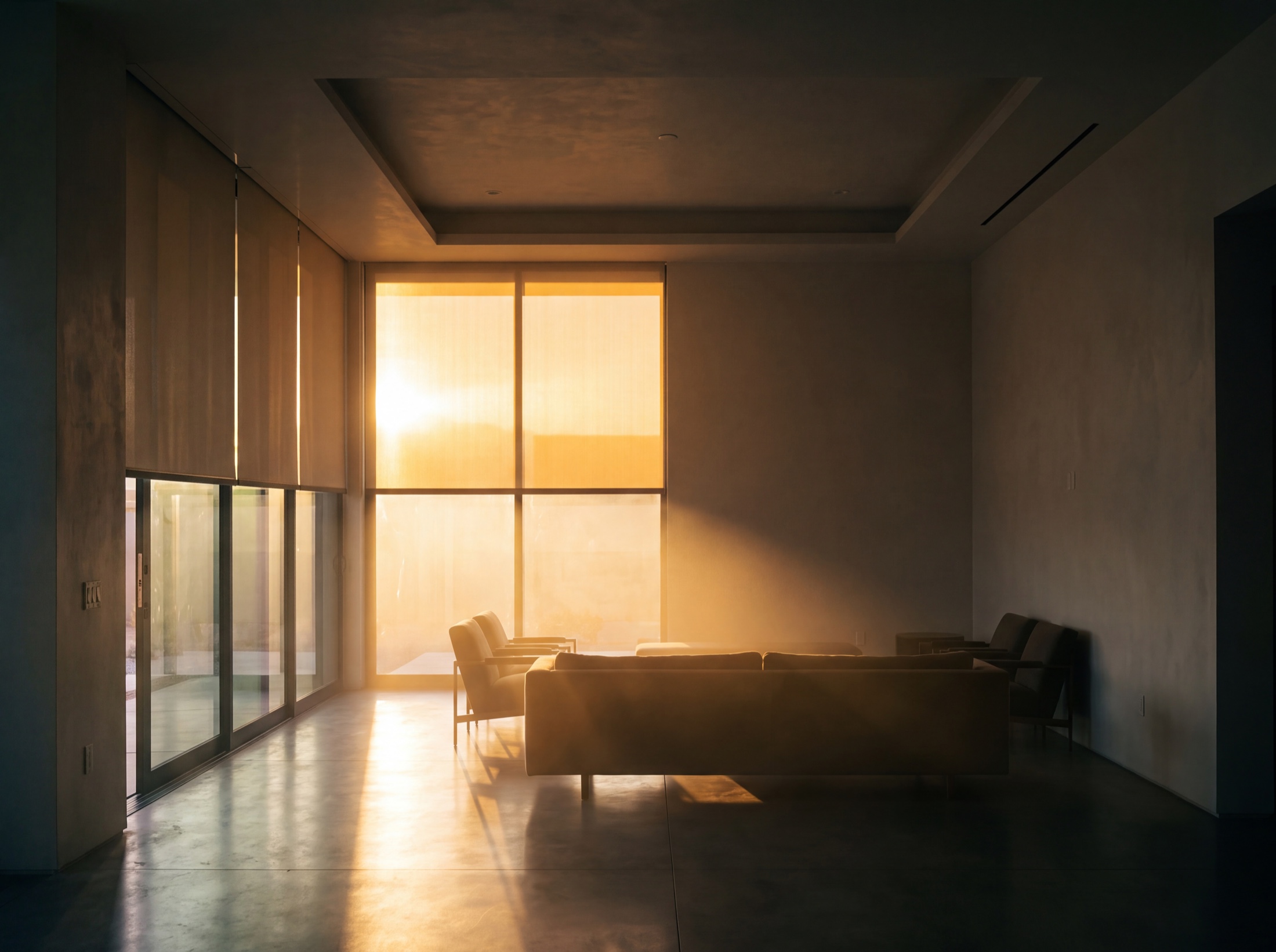
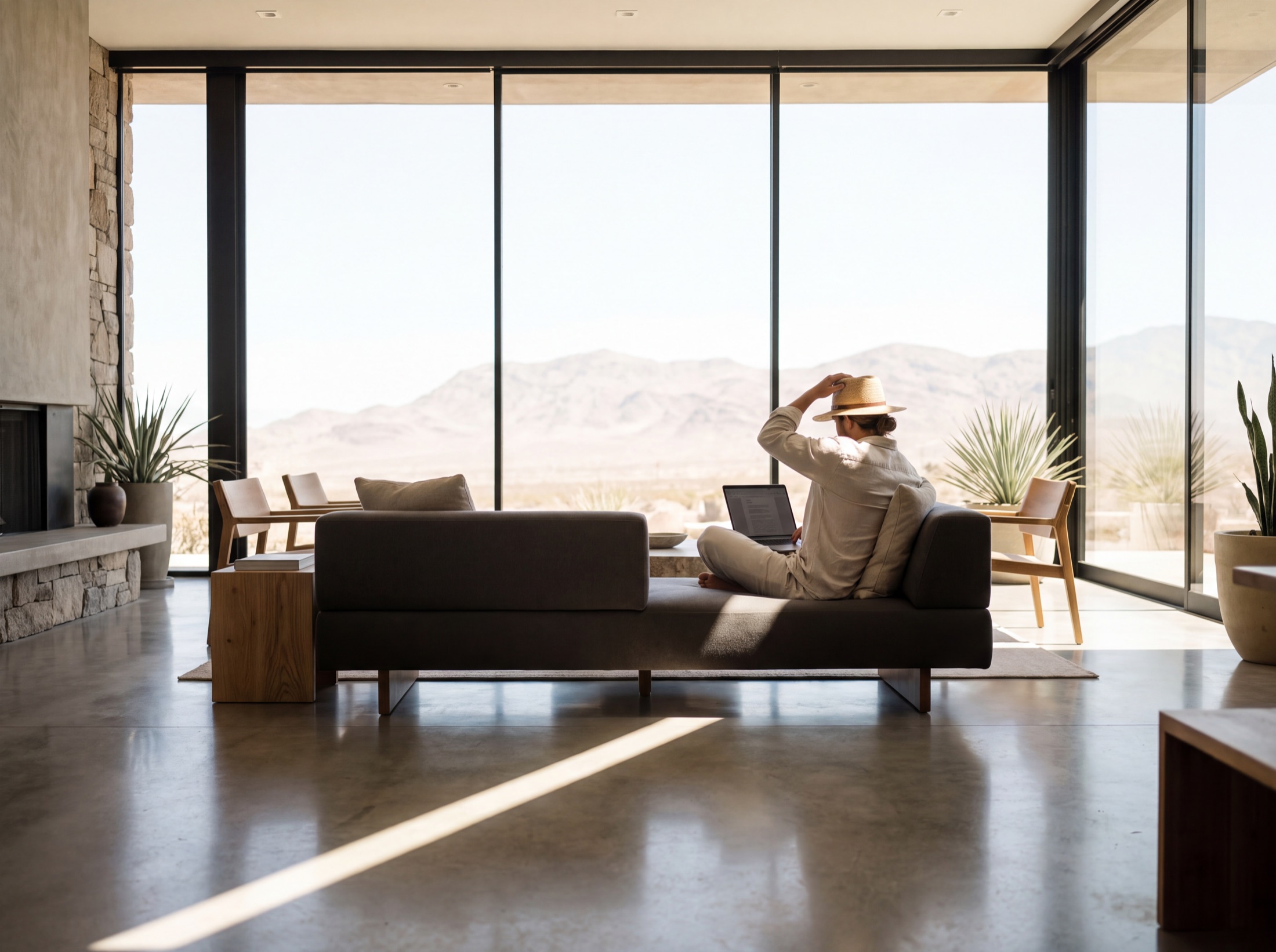
What desert light does to a home
The glass you bought for the view turns on you every afternoon.
Las Vegas gets more sun than almost anywhere you could choose to build, which is why the glass is there. It is also why the same glass turns on you every afternoon: glare that flattens a screen and empties your favorite chair, heat that makes the west rooms unusable until sunset, and floors, art and furniture that fade a little more every summer.
Then night reverses the problem. Rooms that felt private at noon become display cases after dark, and at dawn the light returns before you want it. None of this is a flaw in the house. It is what glass does here, and it is exactly what shading is for.
The quiet answer
Sheers, blackouts and schedules built on the sun itself.
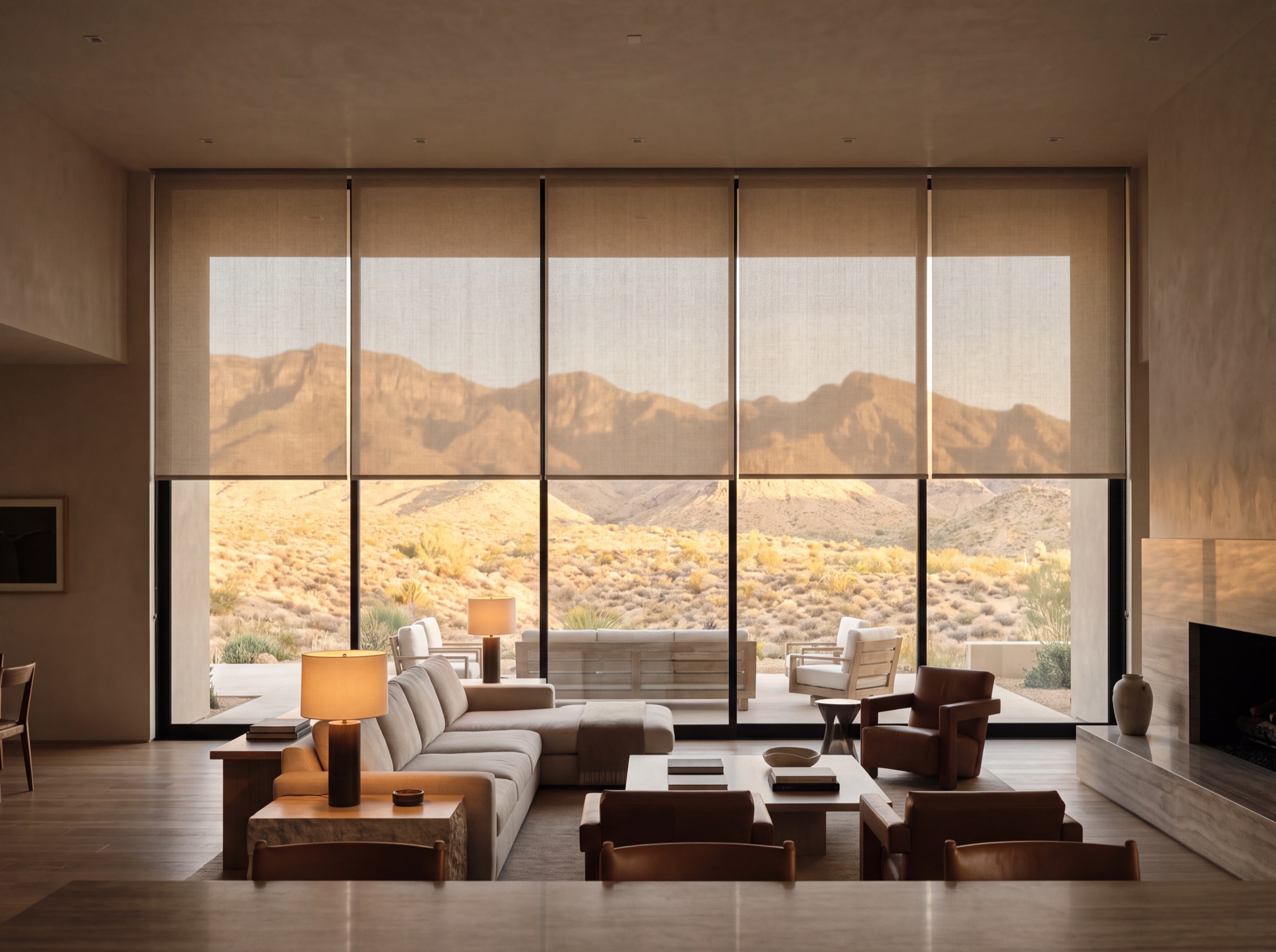
Motorized shading deals with the desert on a schedule instead of asking you to. Shades track the sun through the day: sheers drop to cut glare while the view stays, blackouts hold a bedroom dark until you actually want morning, and by the time the west glass turns hostile the room is already protected.
- Lutron shading systems: Palladiom where the hardware deserves to be seen, Sivoia where it should vanish into a pocket. Quiet enough that the movement, not the motor, is what you notice.
- Fabrics chosen per window, not per house. Open weaves on the view walls, dim-out where screens live, true blackout where you sleep, selected with your interior designer.
- Hem bars that stay level, and shades that travel in unison across a wall of glass. Alignment is a commissioning task, not luck.
- Schedules built on the sun, not on clock times that drift with the seasons, so the house responds to the light it is actually getting.
- Privacy without a blackout: sheers and dual shades that blur the view in while keeping the view out.
Shades that know what the lighting is doing
The test is whether the room behaves as one thing.
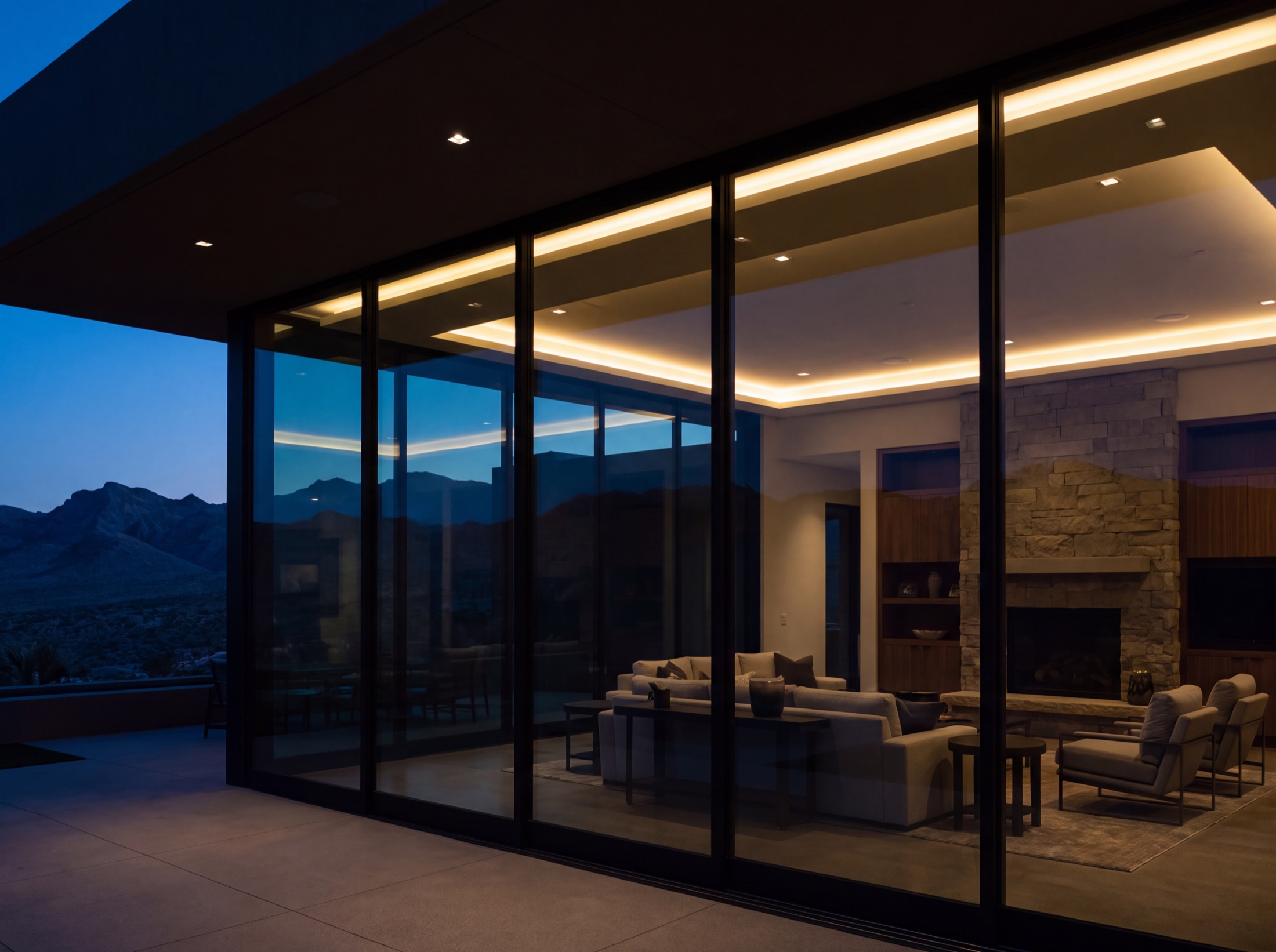
A shade on its own is a convenience. A shade that works with the rest of the house is a different thing entirely. When the shades drop for a movie, the lights fall with them. When you press Goodnight at the bedside, the blackouts close, the house lights step down, and the room goes genuinely dark. At dawn the sheers rise first so the morning arrives gently, and the blackout waits for you.
Shading, lighting and control are designed against the same drawings and programmed by the same team, which is why one press does the work of ten adjustments, and why guests never need an explanation.
New build, or the house you are in
Pockets before drywall, retrofit routes after it.
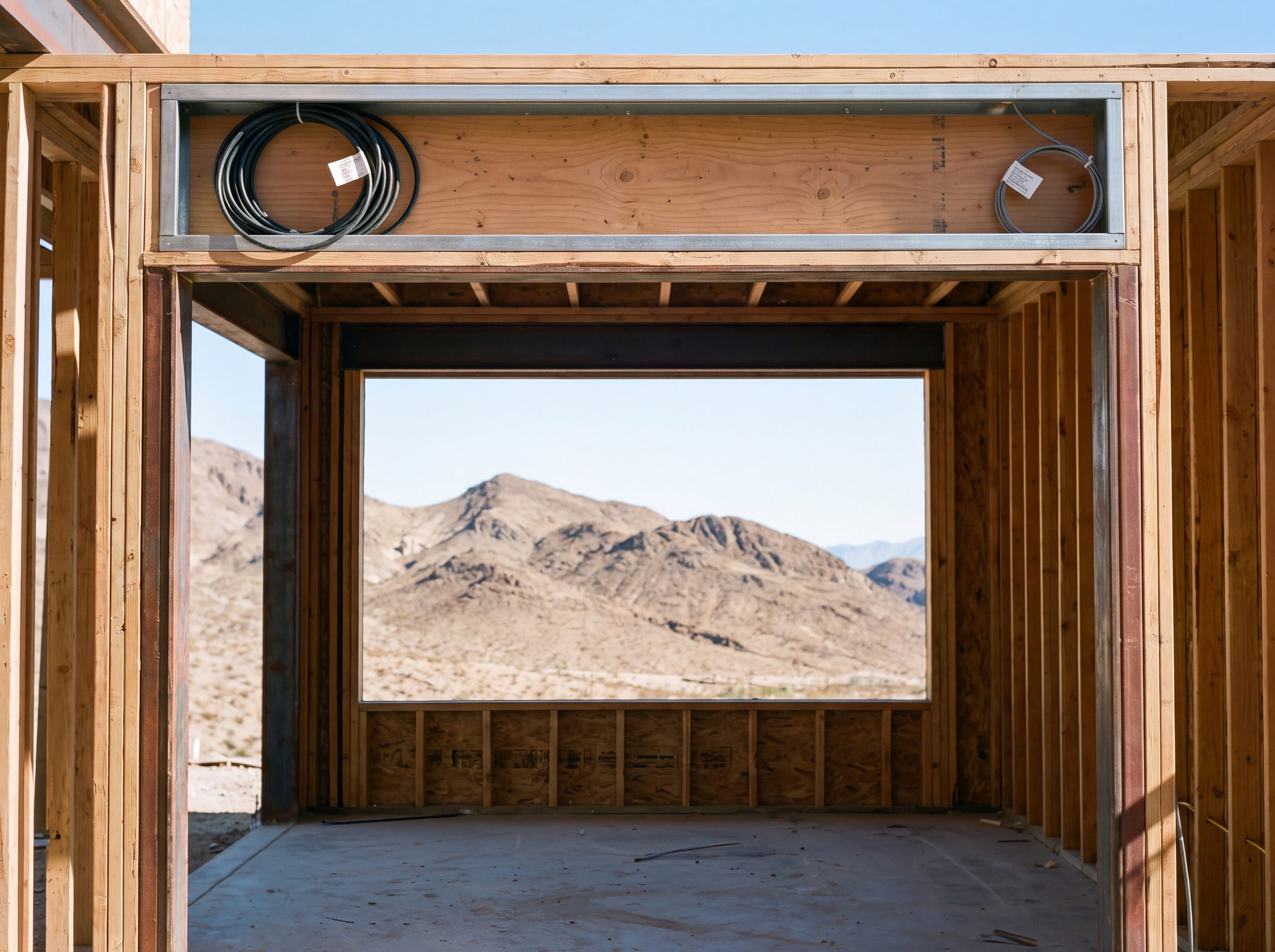
The best time to plan shading is before the drywall closes: pockets framed into the window heads, power at each opening, control wiring run while the walls are open, fascia and finish details agreed with your builder on the drawings. Done then, shading is engineered into the architecture rather than added to it, with the pocket concealed and nothing surface-run.
In a finished home the tradeoffs are real. Battery drives are quiet, and a charge lasts long enough that upkeep is an occasional task rather than a routine. Surface-mounted fascias can be finished to sit calmly against the frame. You give up the fully recessed pocket, and you keep your walls. On most retrofits that is the right trade, and we'll tell you plainly when it isn't.
What's in, what's out.
Included
- Shading design and a window-by-window schedule
- Fabric selection: openness, dim-out and blackout
- Pocket, fascia and wiring details coordinated on the drawings
- Lutron Palladiom and Sivoia supply and installation
- Programming: sun schedules, scenes and lighting integration
- Alignment, commissioning and handover documentation
06 items
Usually separate
- The windows and glazing themselves
- Decorative drapery fabric, through your interior designer
- Window film and glazing treatments
- Fixed exterior shading: pergolas, louvers and overhangs
04 items
Better together
- Lighting design and control
- Control and automation
- Home theater and media rooms
- Care plans and monitoring
04 items
Asked in every shading conversation.
Will shading actually stop our furniture and art from fading?
It will slow it substantially, and we won't pretend it stops it. Fading is driven by UV, visible light and heat together, so the honest answer is layered: fabrics chosen for each exposure, schedules that cover the glass during the hours nobody is in the room, and for serious pieces, a conversation about the glazing itself. The point of motorizing it is that the protection happens every day without anyone remembering to do it.
Blackout or sheer? We want the view and we want to sleep.
You want both, which is why bedrooms usually get both: a dual shade with a sheer and a blackout in the same pocket. The sheer manages the day, the blackout manages the night, and where genuine darkness matters we fit side channels, because fabric alone always leaks a line of light at the edges. Anyone promising total blackout without them hasn't slept in the room.
We are mid-build. What has to happen before drywall?
Three things: pockets framed into the window heads, power run to each opening, and control wiring routed while the walls are open. All of it is coordinated with your builder on the drawings rather than improvised on site. If the walls are already closed, battery drives and surface fascias are the practical route, and we'll tell you plainly what each window gains and gives up.
Our west glass is brutal from three o'clock on. Will interior shades cope?
They'll do a lot, and we'll be straight about the physics. A lowered shade ends the glare and blocks a meaningful share of the heat, but some solar gain is through the glass before any fabric can act. The schedule matters as much as the material: shades that drop before the sun reaches the glass, not after the room is hot. On extreme exposures we say so, and talk about denser fabrics, dual shades or exterior measures rather than overpromise.