
Home automation and smart home control.
One interface for lighting, shades, music, video, climate and security. Crestron, Lutron, Control4 or Savant, chosen to suit the house.
How a house ends up with ten apps
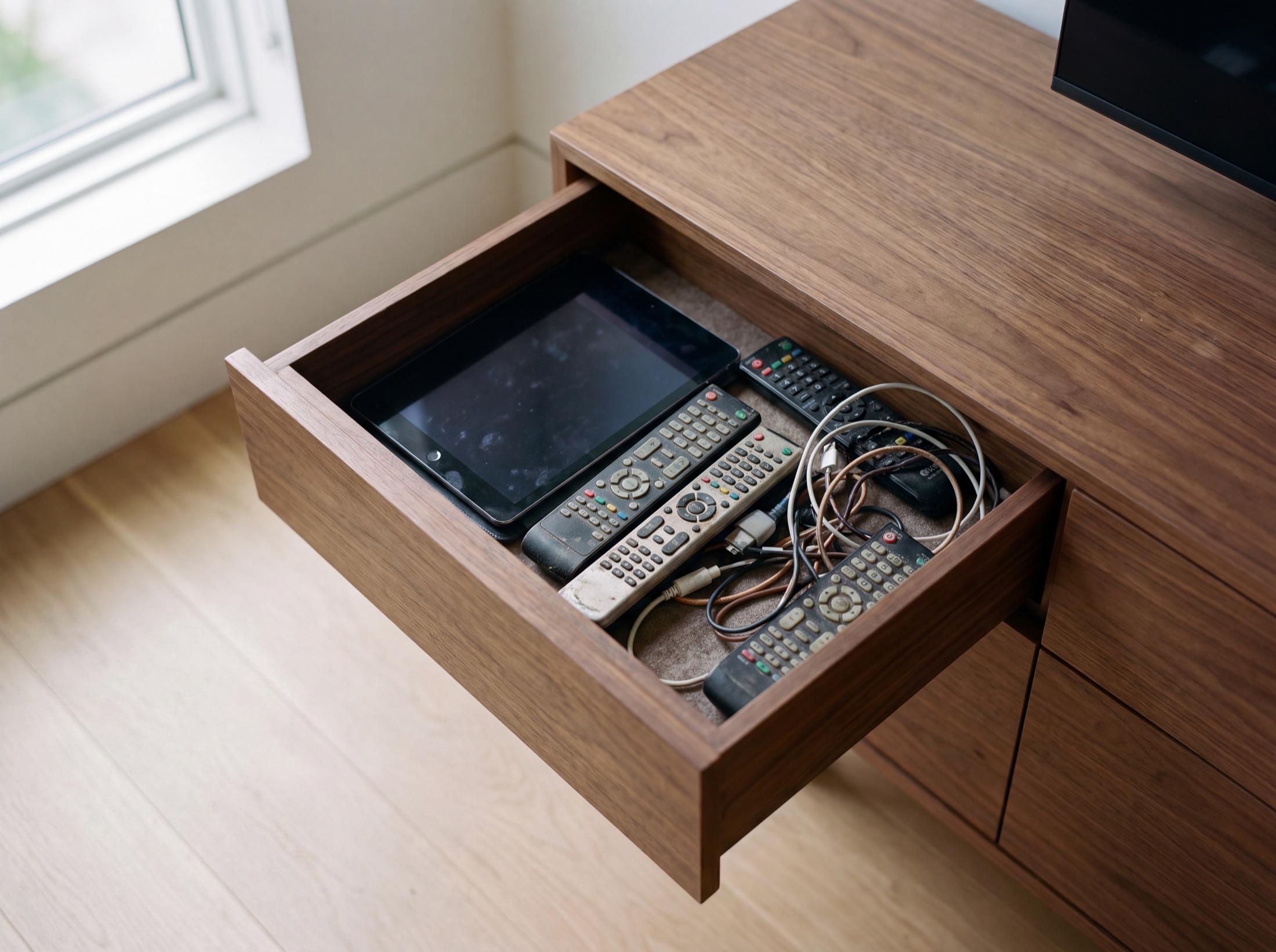
Ten remote controls that happen to be made of glass.
Nobody chooses it. The lighting arrives with an app, then the shades, the cameras, the pool, the garage, the thermostats, each one reasonable on its own. A few years in, there is a folder on your phone called Home and exactly one person in the family who knows which icon does what. That isn't a smart house. It is ten remote controls that happen to be made of glass.
Our test is blunt: not how much technology the house carries, but whether it behaves as one thing. A house where one app exists to keep track of the other nine hasn't been integrated. It has been inventoried.
Real integration is design, not shopping. The shades know where the sun is. The lights know what the shades just did. The thermostat knows whether anyone is home. One decision, made once, moves through the whole house in the right order. That only happens when every system is designed against the same drawings and programmed by the same team, which is exactly how we build.
One interface, wherever your hand lands
The measure of finished programming is a houseguest.
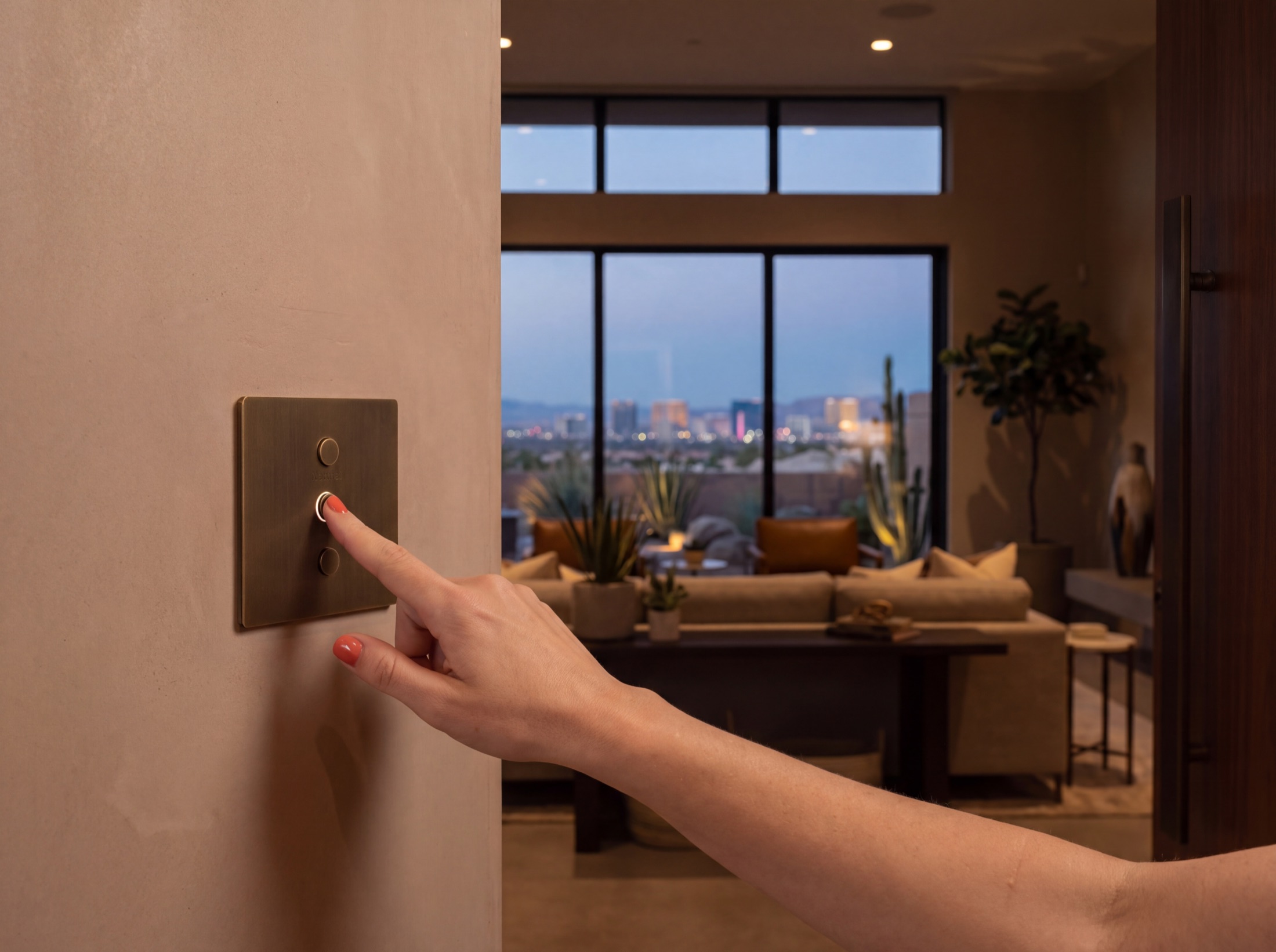
Control should meet you in the form you would naturally reach for, and around the house that is rarely a phone.
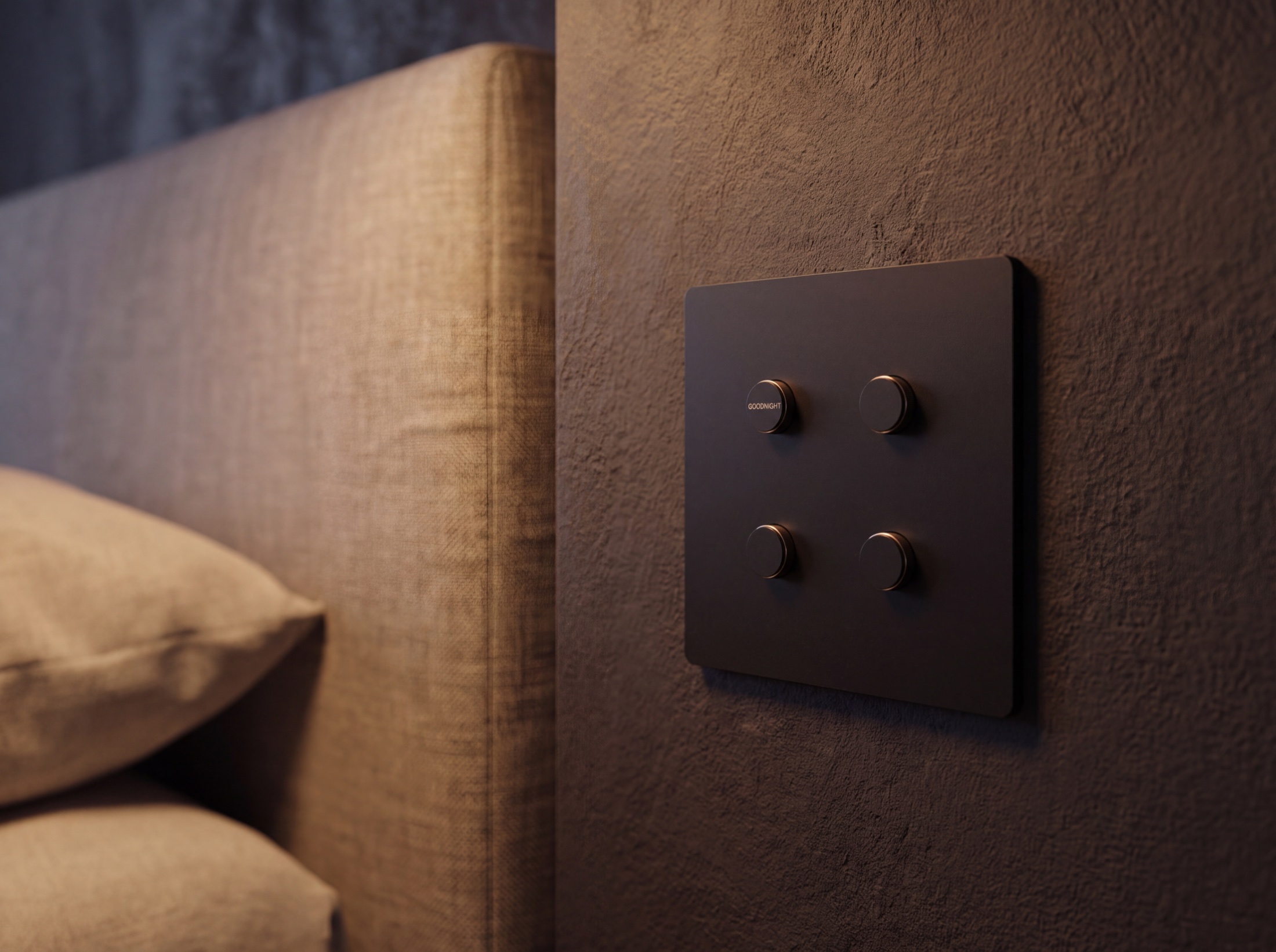
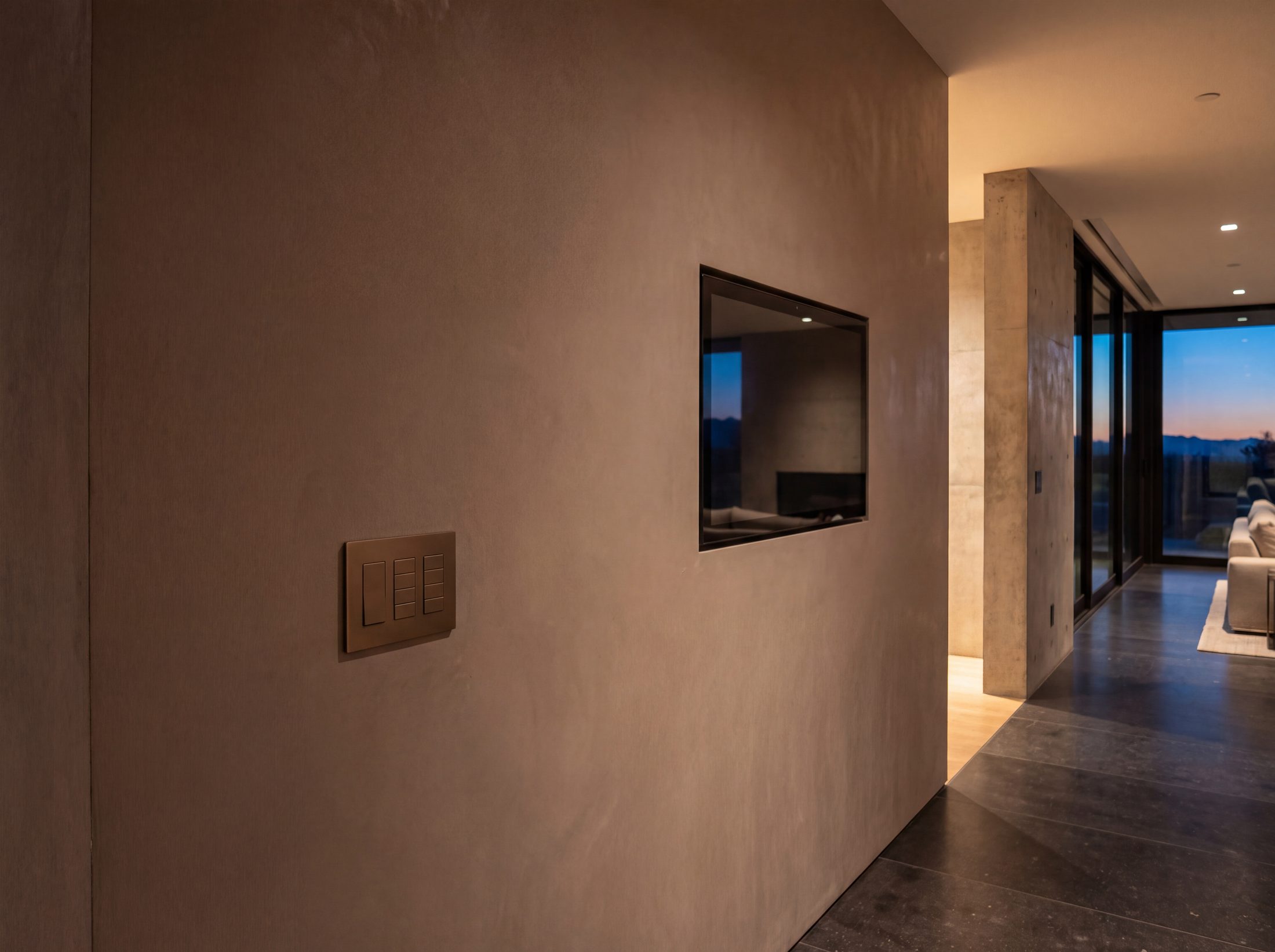
- Keypads engraved in plain language: Morning, Entertain, Goodnight. They sit at the room entry, where a switch would be, so nobody has to hunt.
- Touchscreens flush in the wall at the places a whole floor is run from: the kitchen, the primary suite, the front hall.
- One app for the whole house, not eleven. It earns its place when you are away from home: the gate from the dinner table, the thermostat from the airport.
- A proper remote where a remote is right: in the theater and the media lounge, one handset drives every source.
- Voice where it helps, never as the only way in.
The measure of the programming is a houseguest. If a visitor can turn on the lights, play music and watch a movie without asking you anything, the interface is finished. If they have to ask, it isn't, and we keep working until they don't.
Scenes that move through the whole house
One decision that used to be ten, in the right order.
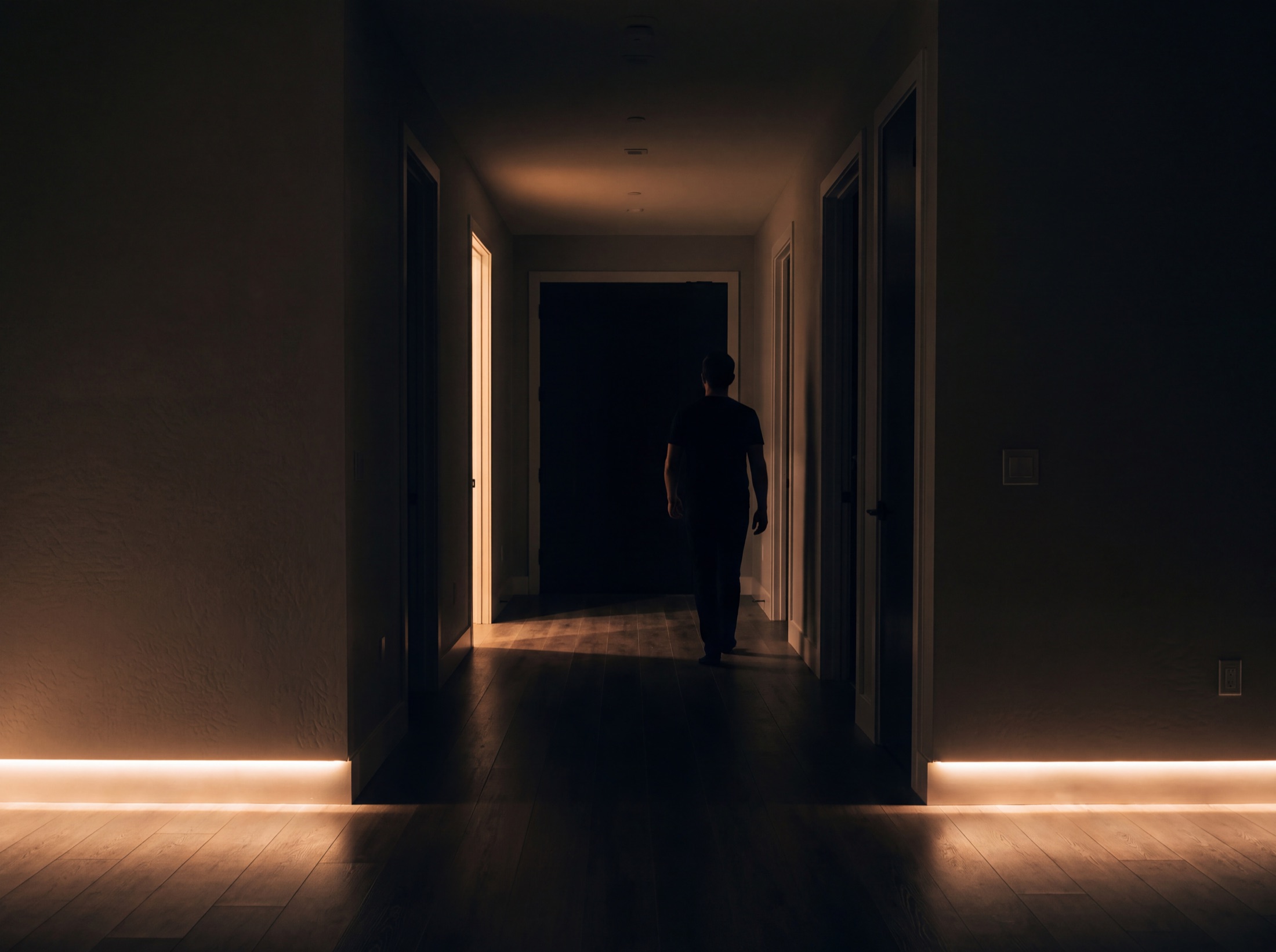
A scene is one decision that used to be ten. Goodnight, pressed once at the bedside: the doors lock, the garage confirms it is closed, the downstairs lights step off, the blackouts drop, the thermostat sets back, the alarm sets to stay, and the lamp you are reading under doesn't so much as flicker.
A good scene is order and restraint. It reaches every system that matters and leaves the rest alone, in a sequence that makes sense in the dark: the lights hold until the door has actually closed, the alarm waits for the garage. None of that is luck. It is programmed, walked at night, and tuned in the first weeks of living with it, because no drawing predicts a household perfectly.
Scenes here also follow the desert. Evening starts at the actual sunset, not at a clock time that drifts with the seasons.
The job defines the hardware
Crestron, Lutron, Control4 or Savant. Judged on any of them.
Crestron, Lutron, Control4 and Savant sit at the center of our residential work, and we are happy to be judged on any of them. What we won't do is decide your control system before we've seen your drawings. The job defines the hardware, never the other way around.
They are all excellent, and they are excellent at different houses. At discovery we look at the architecture, the systems list and the way you actually live, then recommend a platform with the reasoning attached. If the honest answer is the less expensive one, that is the answer you get.
Whatever the badge on the processor, the house is built the same way: every system on the same drawings, one team programming it, one company answerable when you call. To you it should never matter which platform is underneath. That is the point.
What's in, what's out.
Included
- Control system design coordinated on the architectural drawings
- Keypad layout and engraving schedules, agreed room by room
- Crestron, Lutron, Control4 and Savant supply and installation
- Programming: scenes, schedules and every system in the house
- Gate, garage, pool and spa integration
- Walkthrough, tuning after move-in, and handover documentation
06 items
Usually separate
- Internet service and provider contracts
- The mechanical equipment itself: HVAC, pools and gates
- Personal phones and tablets
- Consumer gadgets without a supported integration path
04 items
Better together
04 items
Asked in every control conversation.
Three different companies installed what we have. Can it become one house?
Usually, yes. We start with an audit of what is installed and what it can talk to, keep what earns its place, and build the connections the original installers never made. Sometimes the honest finding is that a clean rebuild costs less than a rescue. Either way, you get the assessment in writing before you commit to anything.
What if we just like switches?
Then you'll like keypads. They live where switches live and press like switches press, except one button means the whole room instead of one circuit. Nothing in the house requires a phone, an app or a menu. The app exists for the moments a switch can't reach: the gate from the dinner table, the thermostat from the airport.
Crestron, Control4, Savant or Lutron: which would you put in?
The one the job asks for. The size of the house, the systems on the list, how deeply you want it tailored and what you already own all push the choice, and the recommendation arrives with the reasoning on paper rather than as a favorite. Ask an integrator who only sells one platform the same question, and notice that you get the same answer every time.
What happens when the internet goes down?
The house keeps working. Control runs locally on the network we engineer, so keypads, scenes and schedules don't care whether the line is up. You lose the things that genuinely live outside the house, remote access and streaming, until service returns. A control system that stops working when the internet does is a design fault, not a fact of life.