
Architectural and landscape lighting.
Architectural, landscape and pool lighting with fixtures, dimming and scene control. Designed with your architect and interior designer.
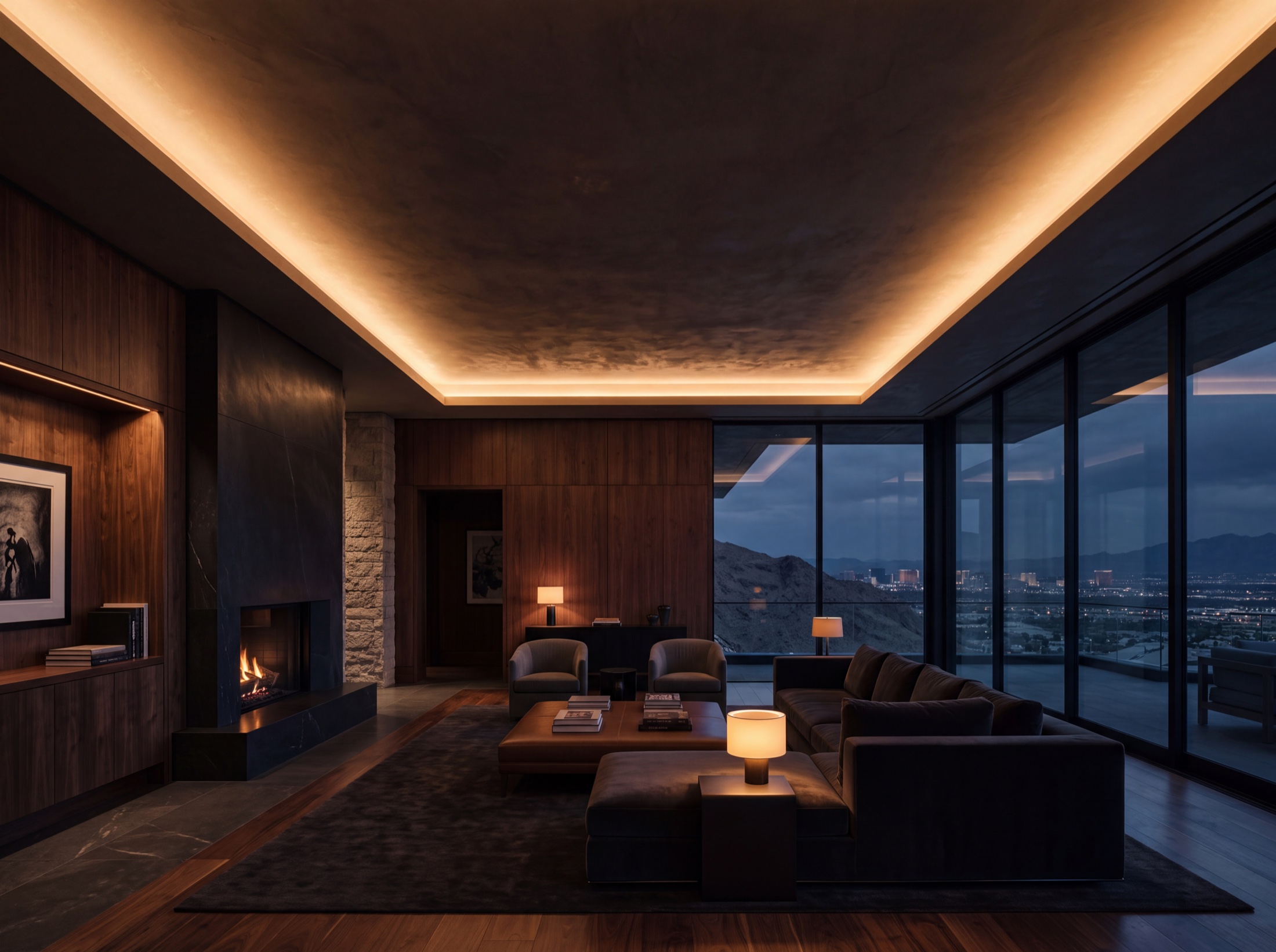
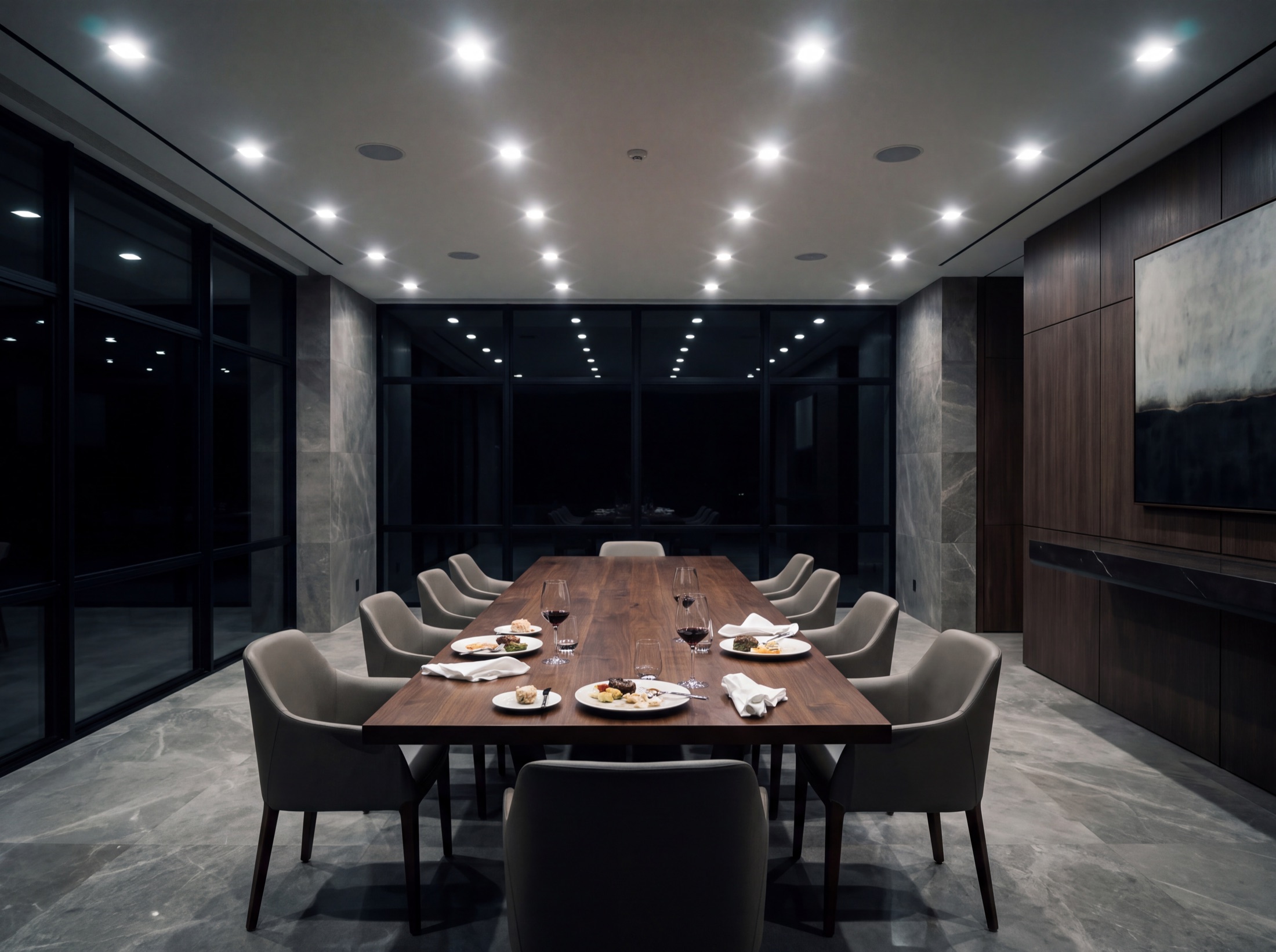
The house at eight in the evening
The most expensive hours you spend at home, lit like an office.
Desert light is generous all day, and then it leaves fast. What most houses offer in its place is a bank of six switches at every doorway and recessed cans running at one level from dinner until midnight. The room that looked composed at noon goes flat, and the glass turns black.
None of that is a wiring fault. It is the absence of design. Light has level, temperature and direction, and left to a wall of toggles it defaults to the worst of all three: too much, too cold, and straight down.
Scenes, not switches
Ambient, task and accent, composed and put on one press.
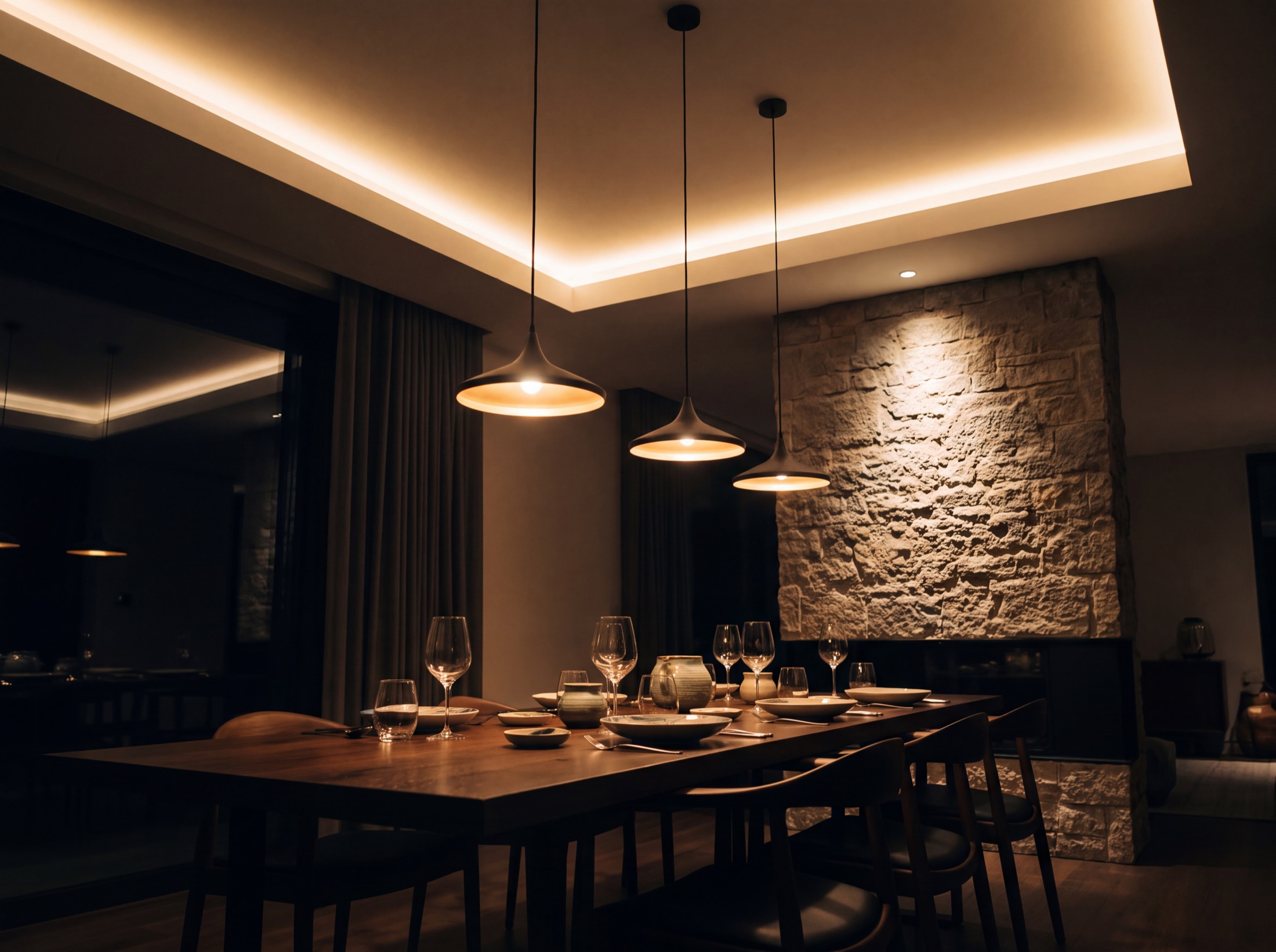
We design each room in layers: ambient light to carry the space, task light where you actually do things, accent light to give the room its depth. Then we compose those layers into scenes and put them on one engraved keypad at the doorway, in place of the bank of six.
- Lutron control throughout, designed, installed and programmed by the same team, so the press that works on day one still works in year ten.
- Warm dimming that behaves like flame: as a scene falls, its color warms with it, the way filament always did. An LED that dims but stays cold hasn't really dimmed at all.
- Honest task light: counters, desks and reading chairs get true working light, aimed at the work, so the ambient layer can stay calm around it.
- Coves that conceal their source: the ceiling reads as a line of light, never a row of fixtures. You see the glow, not the emitter.
- Grazing where it belongs: light rakes across stone and slatted timber to bring the texture up, and flat planes are lit evenly, because a finished surface should never be interrogated.
- No glare, anywhere: every source shielded and aimed so light lands on the room and never in your eyes, at the table or on the pillow.
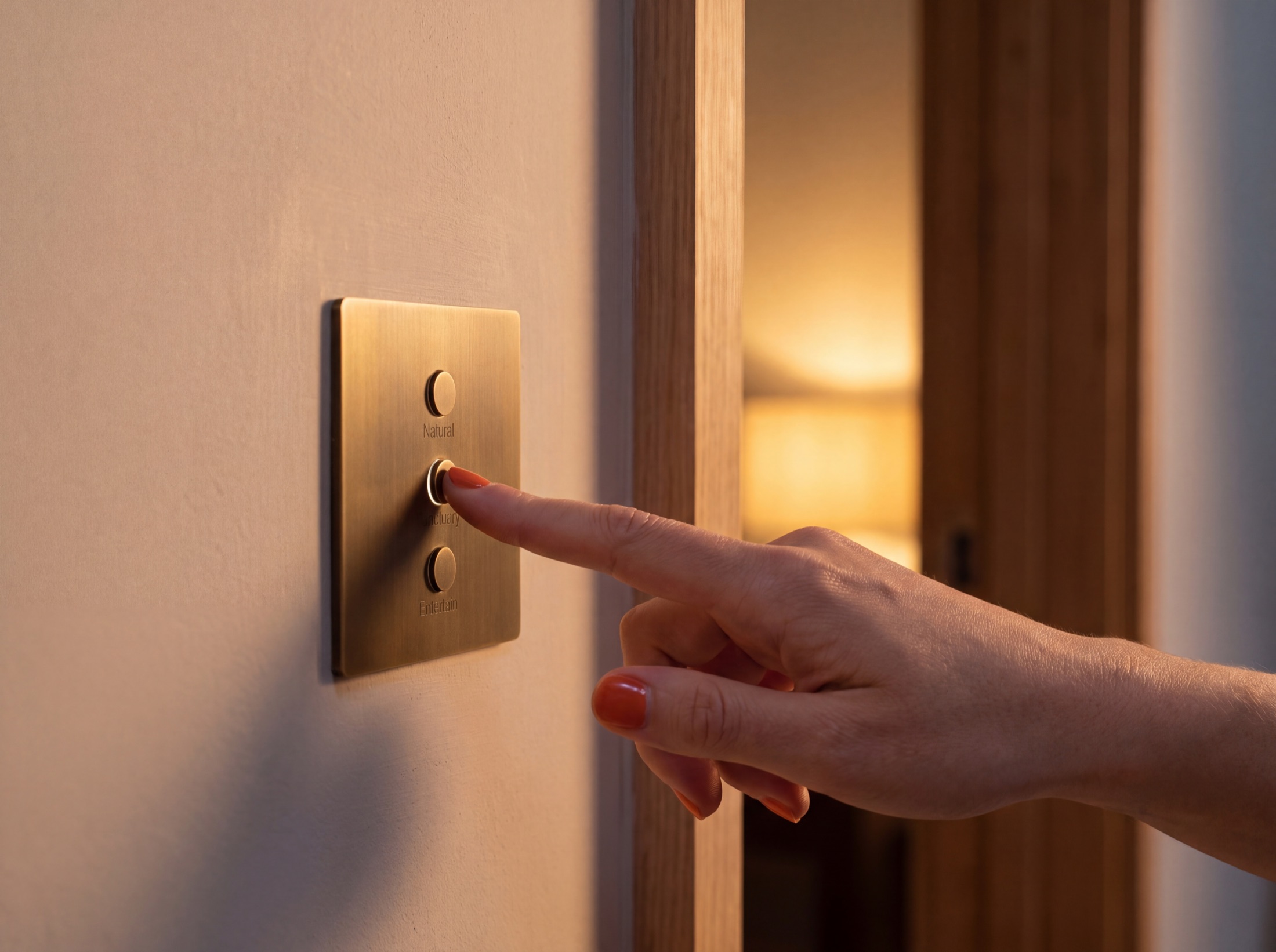
One keypad, engraved in plain language
Dinner, Evening, Goodnight: where the design meets your hand.
The keypad is where the design meets your hand, so it gets the same attention as the light itself. One keypad per doorway, flush to the wall and matched to the finish, with buttons engraved in the words you would actually say: Dinner, Evening, Goodnight. Nobody has to remember which of six toggles does what, because there are no six toggles.
And the scene is better when it isn't acting alone. As the sun crosses the ridge the shades drop and the coves come up to meet them, so the room passes from desert afternoon into evening without anyone touching a thing. Press Goodnight at the bedside and the house settles behind you: paths fall to a low glow, everything else goes dark, room by room. Lighting, shading and control are designed against the same drawings and programmed by the same engineers, which is why one press does the work of ten adjustments.
New build, or the house you are in
Decided on drawings when possible. Staged when not.
The best lighting is decided on drawings. Circuits zoned around how each room will be used, keypad positions agreed at every doorway, and cove sections detailed with your builder before drywall, so the emitter sits concealed and the ceiling keeps its clean line. Done then, the lighting is part of the architecture rather than attached to it. The film here is what that discipline looks like behind the walls: the driver wall, built and dressed like the finish it serves.
In a finished home the route is staged. Lutron dimmers replace the switches you have, keypads take the place of the widest banks, and every existing fixture is tested for how low it will dim before we promise a scene built on it. Some decorative pieces keep their place with a new driver, a few are worth replacing, and we'll tell you which is which before you spend.
What's in, what's out.
Included
- Lighting design: layers, levels and a fixture schedule
- Circuit zoning and keypad positions coordinated on the drawings
- Cove and detail sections agreed with your builder before drywall
- Lutron system supply, installation and programming
- Keypad engraving, scene composition and an evening tuning session
- Commissioning and handover documentation
06 items
Usually separate
- The decorative pieces themselves: chandeliers, pendants and lamps, chosen with your interior designer
- Utility and code lighting in garages and mechanical rooms
- Skylights, glazing and daylight itself
- Holiday and event lighting
04 items
Better together
04 items
Asked in every lighting conversation.
Our LEDs already dim. Why do they flicker and cut out at the bottom?
Because the dimmer and the driver were never chosen as a pair. Most flicker, pop-on and dead travel at the low end comes from that mismatch, not from the fixture. We test the pairing per fixture type, trim the low end so every load falls smoothly to its true minimum, and recommend replacements only where the electronics can't be saved.
Do we lose normal switches?
No. A keypad button is still a button on the wall, it just does more when you press it, and the top button can simply be the room's light if that is how you think. Nothing in the house requires an app or an explanation. The measure we design to is that a guest gets the right light on the first press.
Is warm dimming worth it, or is it a gimmick?
Where your evenings happen, it is worth it: the great room, the dining table, the primary suite. As those rooms dim, the light should warm the way flame does, because a room held at ten percent in cold white reads as a power saving, not an evening. In closets, garages and laundry rooms it buys you nothing, and we won't spec it there. The budget goes where you live.
We host a lot. Can one room do dinner for eight and a party for eighty?
That is exactly what composition is for. Dinner is pendants low, coves warm and the edges dark. A party lifts the whole room and pushes the accents so the space carries a crowd. The morning after runs full working light for the cleanup. Same room, same keypad, three different rooms in effect.