
Home networks and WiFi.
Structured wiring, managed switching and whole-home wireless. Labeled, tested to standard, and remotely monitored after handover.
The whole house is on it
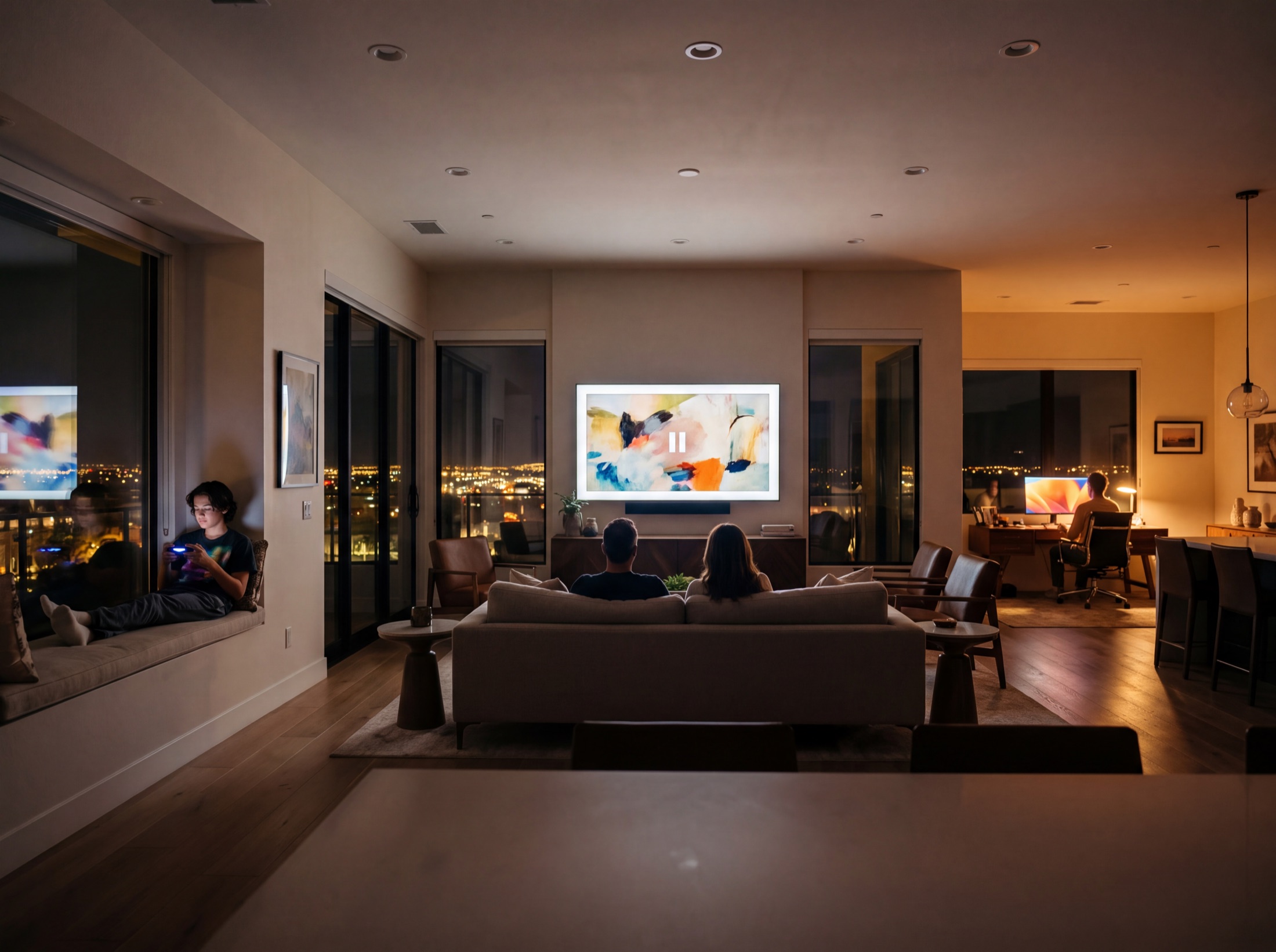
Every press of every keypad crosses it before the room responds.
Count what touches the network in one evening: a 4K stream, music in four rooms, the gate cameras and the doorbell, shades on their sunset schedule, phones, laptops, a game console, and tomorrow morning a video call that can't drop. In a home we build, the control system rides it too: Crestron, Lutron, Control4 or Savant, every press of a keypad crosses this network before the room responds.
Which is why a weak network is never a small complaint. When the signal fades in the far bedroom, everything above it looks broken. So we design the network as part of the architecture, not as an accessory from a big-box shelf.
Coverage is planned, not hoped for
Planned on the drawings, verified room by room.
Las Vegas homes are hard on Wi-Fi in specific ways: long single-story plans, block construction and stone feature walls, low-e glass that turns signal back the way it turns back heat, and a back yard that is really an outdoor room. Hope doesn't cover that. Design does.
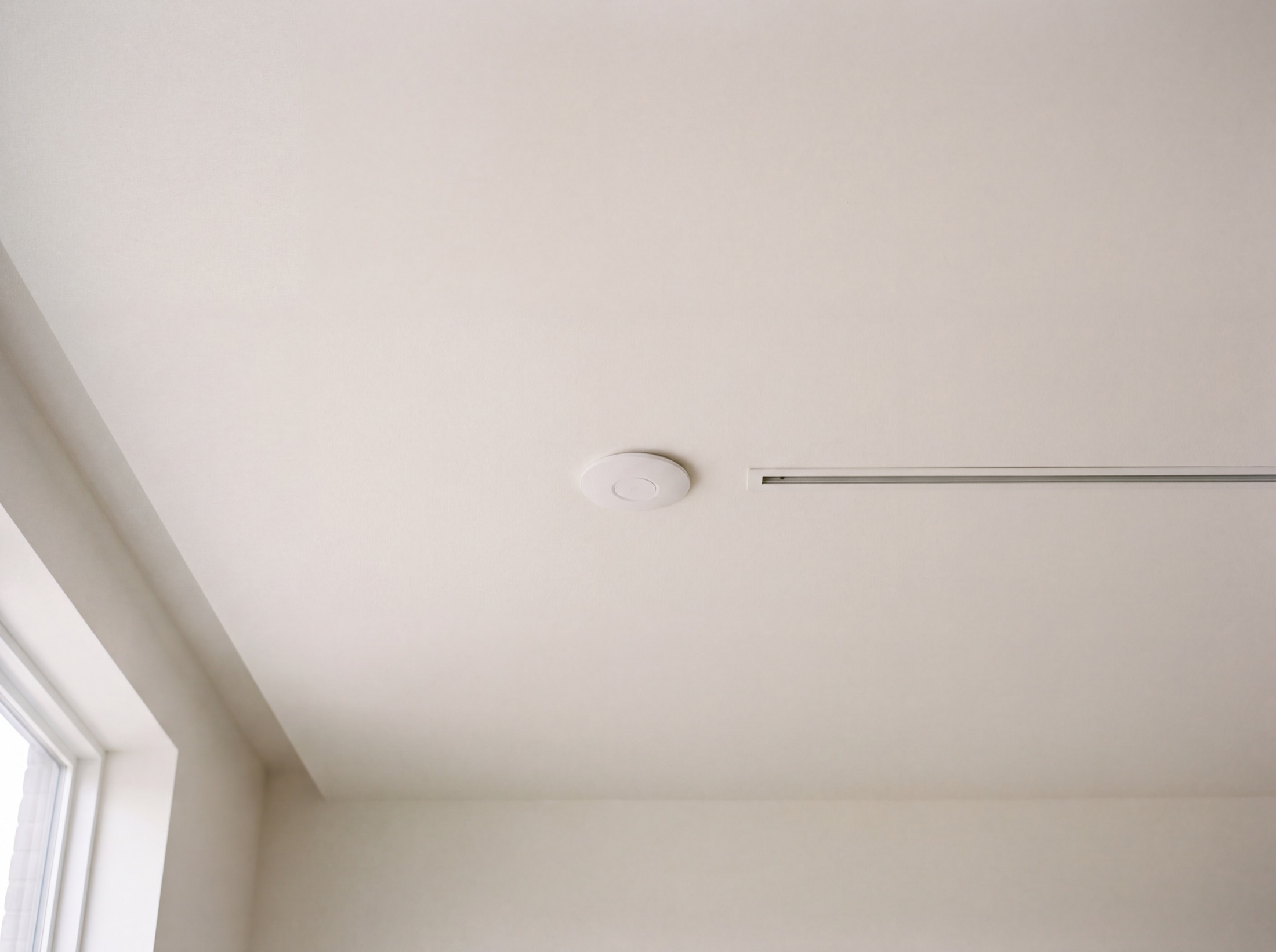
- Planned on your drawings: access point count and placement worked out against the floor plan, the wall build-ups and the finishes, then verified room by room at commissioning, pool deck and casita included.
- Wired access points in the ceilings and closets where the design says, each one cabled back to the rack. Nothing balanced on a bookshelf, nothing repeating a signal it can barely hear.
- Hardware chosen for reliability, not for a logo. Enterprise-grade routing, switching and wireless, the tier built to run for years unattended, sized for a home rather than an office tower.
- Wired drops for everything that never moves: televisions, theater equipment, desktop computers. The fastest Wi-Fi is the traffic you take off it.
- A guest network kept apart from your cameras, your control system and your own devices, so guests never touch either.
A rack the size of the job
One small, dressed, labeled cabinet. Residential scale, deliberately.
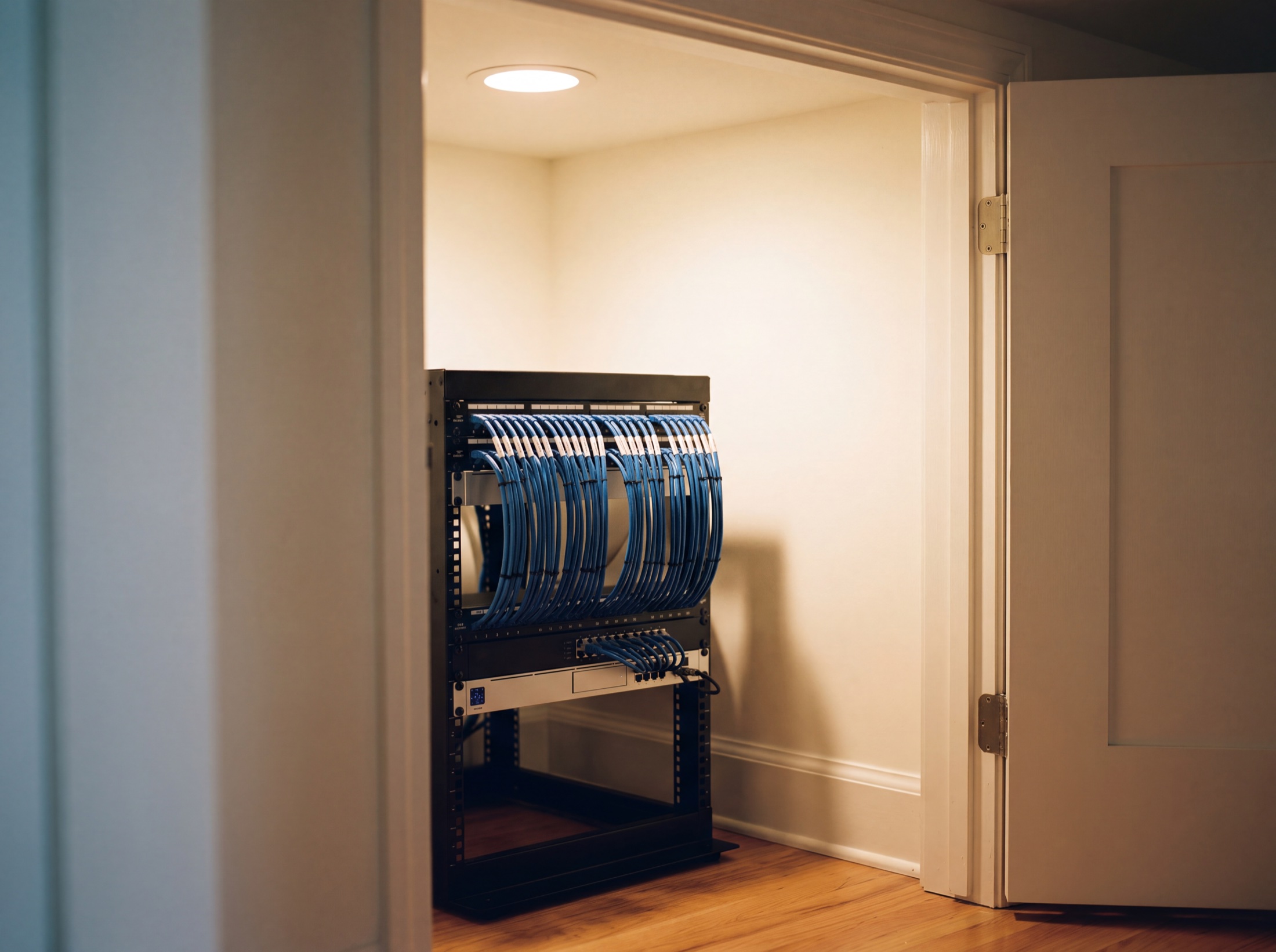
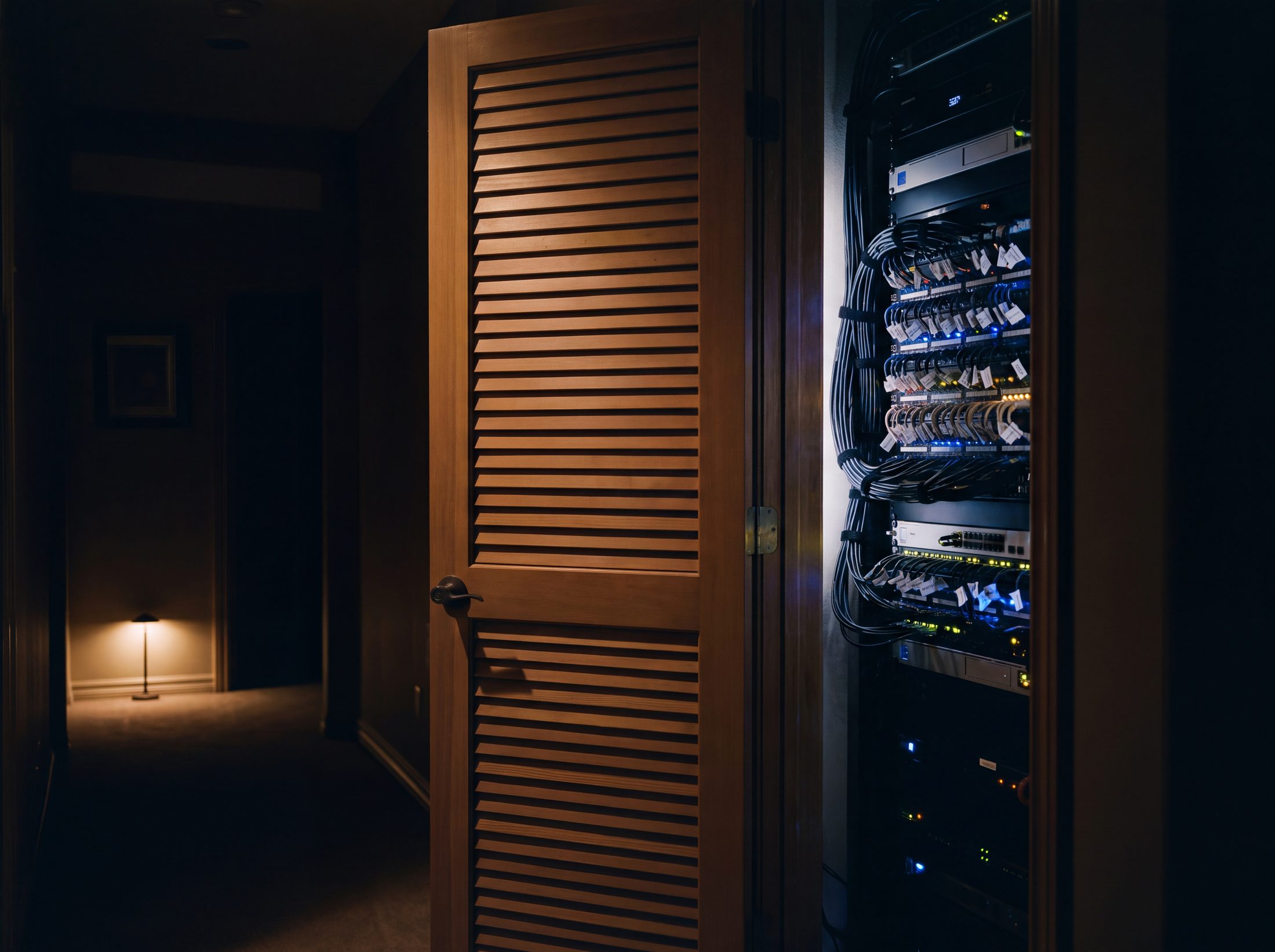
The heart of it all is one small cabinet, usually in the mechanical room or a closet you rarely open: dressed, combed and labeled, every cable readable, every port matched to a drawing. Residential scale, deliberately. You aren't running a data center, and your house shouldn't hum like one.
Small isn't casual. The rack is built and documented so that a fault is a ten minute diagnosis instead of an afternoon of guesswork, and so the network is recorded like the part of the house it is. If you sell the home, that documentation transfers with it, the same way the plans do.
It just works. When it doesn't, we know first.
Monitored after handover. Health, never your traffic.
The network is monitored after handover. Most faults announce themselves to us before they interrupt you: an access point misbehaving, a switch port degrading, an internet connection that flickered at three in the morning. Many fixes happen remotely, before breakfast, without a truck in your driveway.
Monitoring watches the health of the equipment, never your traffic. We can see that a device is unhealthy. We can't see, and don't want to see, what anyone in the house is doing. A care plan puts the response times in writing, so the promise is a contract rather than a sentiment.
What's in, what's out.
Included
- Network design against the floor plan and finishes
- Cabling, containment and wired access point drops
- Enterprise-grade routing, switching and Wi-Fi, supplied and installed
- Rack build, dressing and labeling at residential scale
- Room-by-room coverage verification at commissioning
- Documentation, and enrollment in monitoring
06 items
Usually separate
- The internet service itself, contracted with your provider
- Computers, printers and personal devices
- Your employer's VPN and corporate IT support
- Cellular coverage and signal boosters
04 items
Better together
04 items
Asked in every network conversation.
We already have mesh Wi-Fi pucks. Why is that not enough?
In a modest home it often is, and we'll say so. At Vegas scale it runs out: long plans, block walls and stone push retail mesh into repeating a signal it can barely hear, so every hop gets slower. Our access points are wired back to the rack, placed to the floor plan rather than to the nearest outlet, and each one delivers full strength instead of an echo of it.
One end of the house has no signal. Can you fix just that?
Usually, yes. We assess what is there before we propose anything, and often the honest fix is small: a wired access point or two in the right ceilings, not a whole new system. Where the existing equipment is worth keeping, we keep it. You'll know the real scope, and the reasoning, before you spend.
We both work from home. What does that change?
It changes the design load. The network is sized for the busiest hour of the house, not the average one: two video calls at once, a stream in the theater, cameras recording, backups running. The study gets a wired drop, calls get priority over background traffic, and the coverage plan treats your desk as a place where failure has a cost, because it does.
You monitor the network. Can you see what we do online?
No. Monitoring watches the health of the equipment: whether an access point is up, whether a switch port is erroring, whether the internet connection dropped overnight. It doesn't read your traffic, and we wouldn't accept a system that did. We see that something is unhealthy, never what anyone in the house is doing.