
Whole-home audio and video.
Multi-room audio, architectural speakers and video distribution from a central rack. Controlled by app, keypad or voice.
One home, one soundtrack
Music in every room, technology in none of them.
Most houses do music the hard way: a portable speaker in the kitchen, a soundbar in the den, a phone propped against the bathroom mirror, each with its own volume, its own app and its own idea of what is playing.
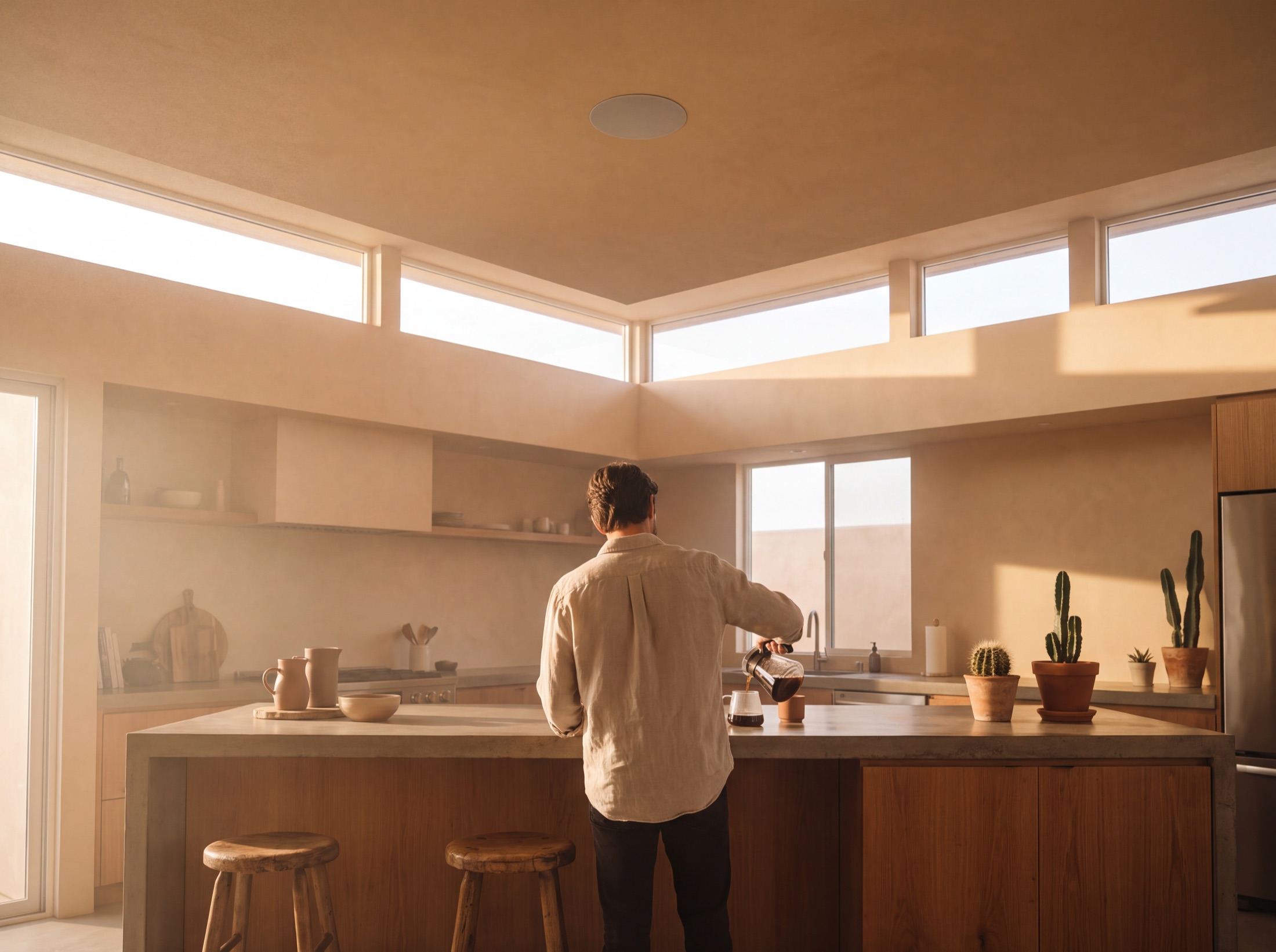
Whole-home audio replaces all of it with one system that treats the house as a set of listening zones. Start the morning playlist in the kitchen and it follows you through the hall and back. Join the great room, dining room and entry together for a party, then let them go their own ways on a quiet Tuesday. Every zone answers from the keypad on the wall, the remote in the room, or the same app that runs the lighting and shades, and a guest can turn it down without a briefing.
Heard everywhere. Seen where you choose.
Architectural, invisible or statement: a design decision, room by room.
How the sound arrives is a design decision, made room by room with you and your architect. Three registers, one system:
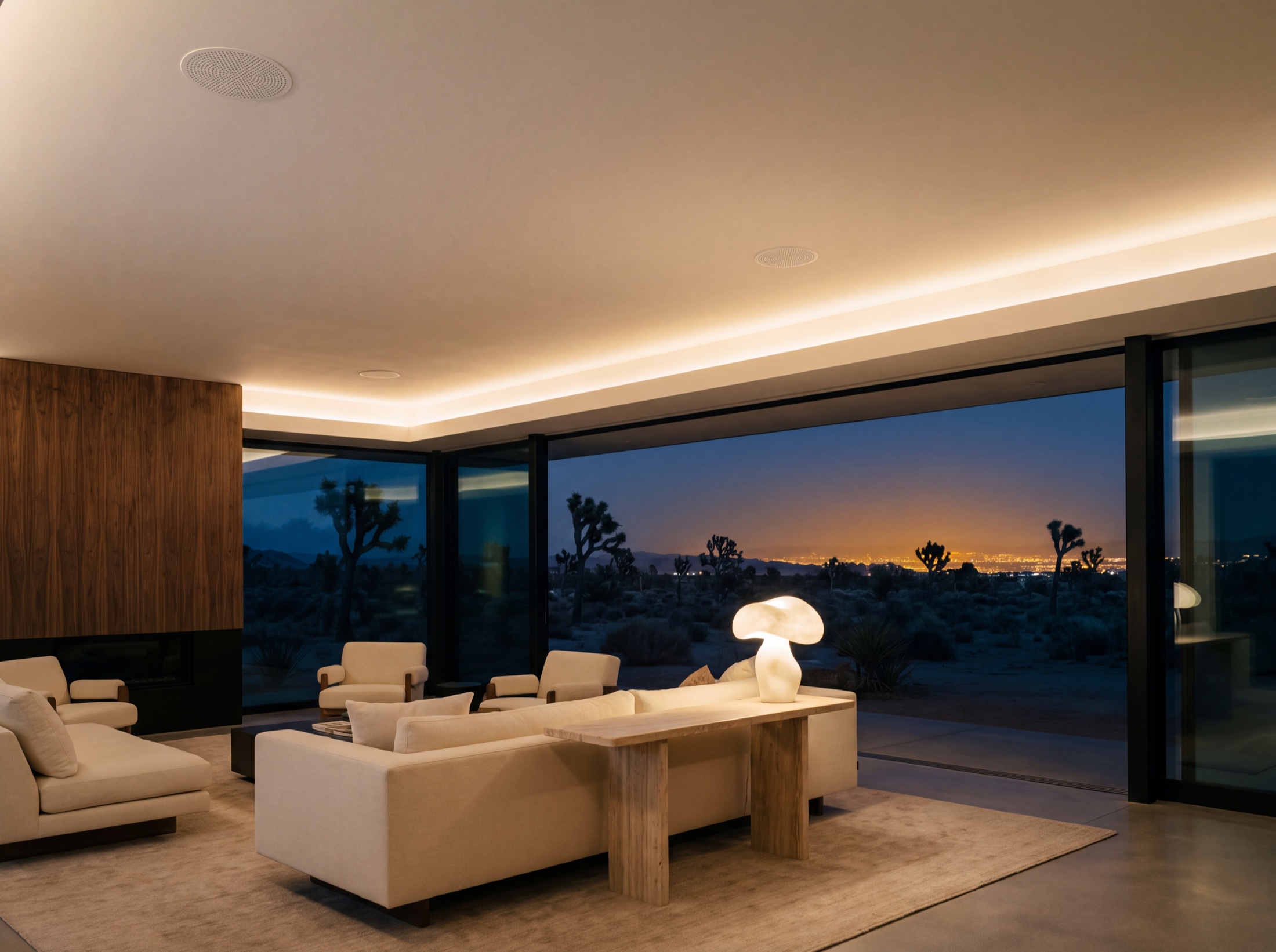
- Architectural audio: trimless in-ceiling and in-wall speakers that sit flush with the plaster and take the ceiling's paint. The room fills evenly, and the eye finds nothing.
- Invisible audio: speakers installed behind the final skim coat that play through the finished surface. In rooms where the architecture must win completely, there is genuinely nothing to see.
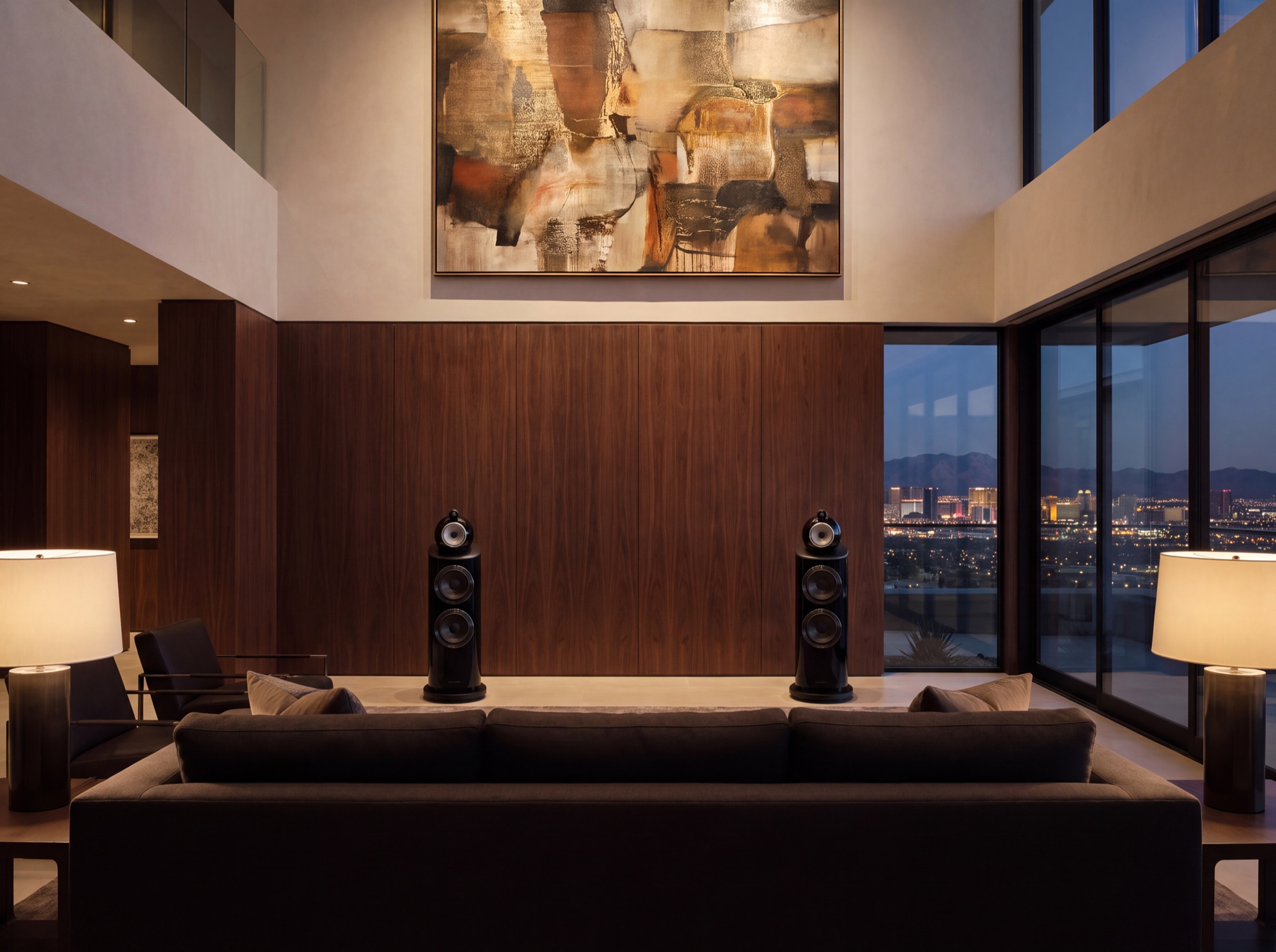
- Statement audio: rooms where music is the point deserve hardware worth looking at. We place it where the design and the acoustics agree: a listening position, not a decoration.
- Placement follows physics: speakers serve a listening zone, laid out symmetric to the room and its seating, never scattered across a ceiling like downlights. Coverage is planned for where people actually sit and stand.
- Tuned to the room: a stone great room is live, a draped bedroom is damped. Each zone is leveled and tuned to its own acoustic character, so the same song sounds right in both.
Every display, one rack
Everything you play lives once, ready everywhere.
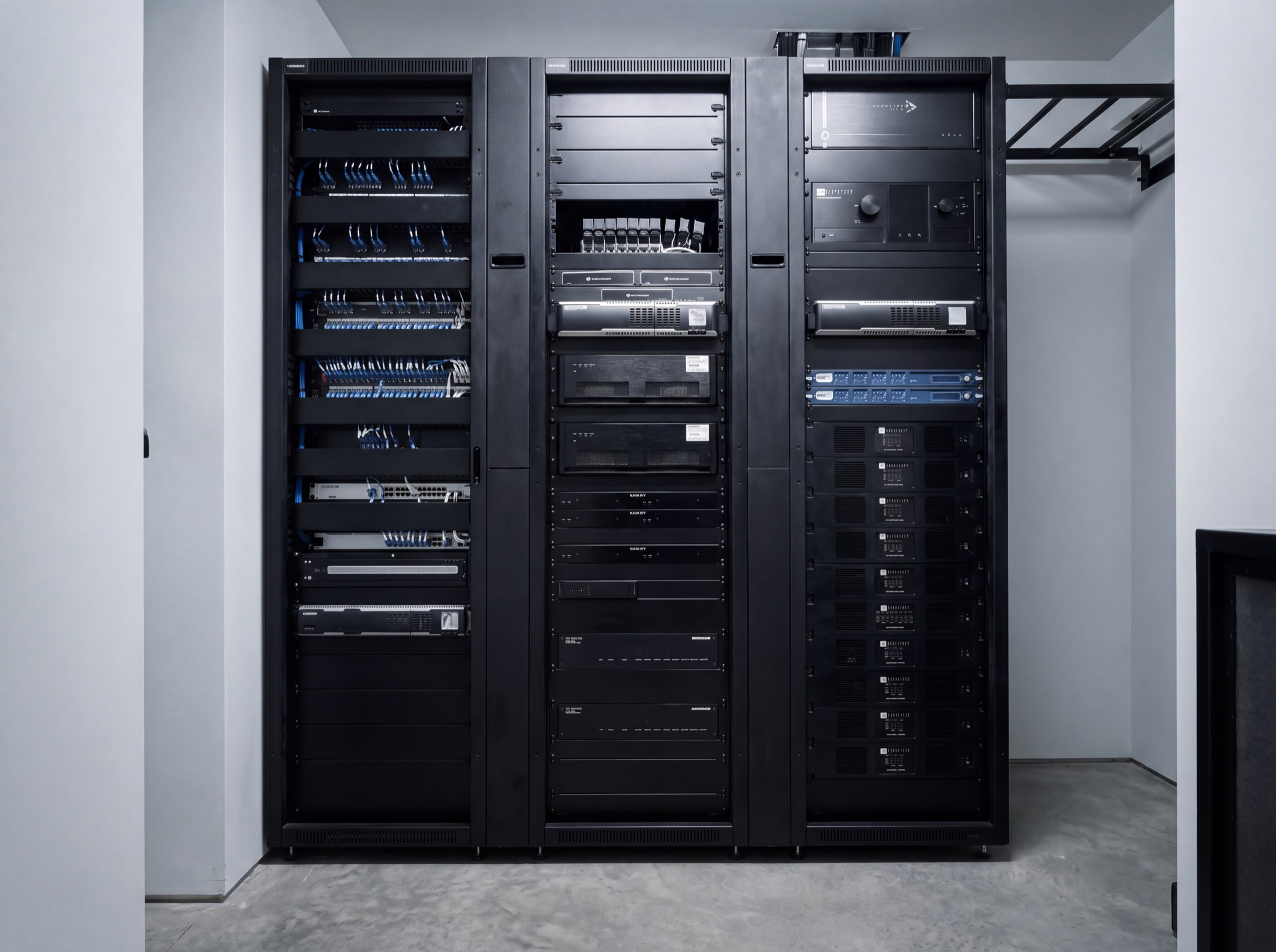
Video works the same way. The movie server, the streaming players, the cable receiver and the game console live once, in one labeled rack, instead of dangling behind every television in the house. Any source reaches any display at full quality, so the film you paused in the media lounge is waiting at the bedroom TV, and on game day every screen in the house can carry the same play.
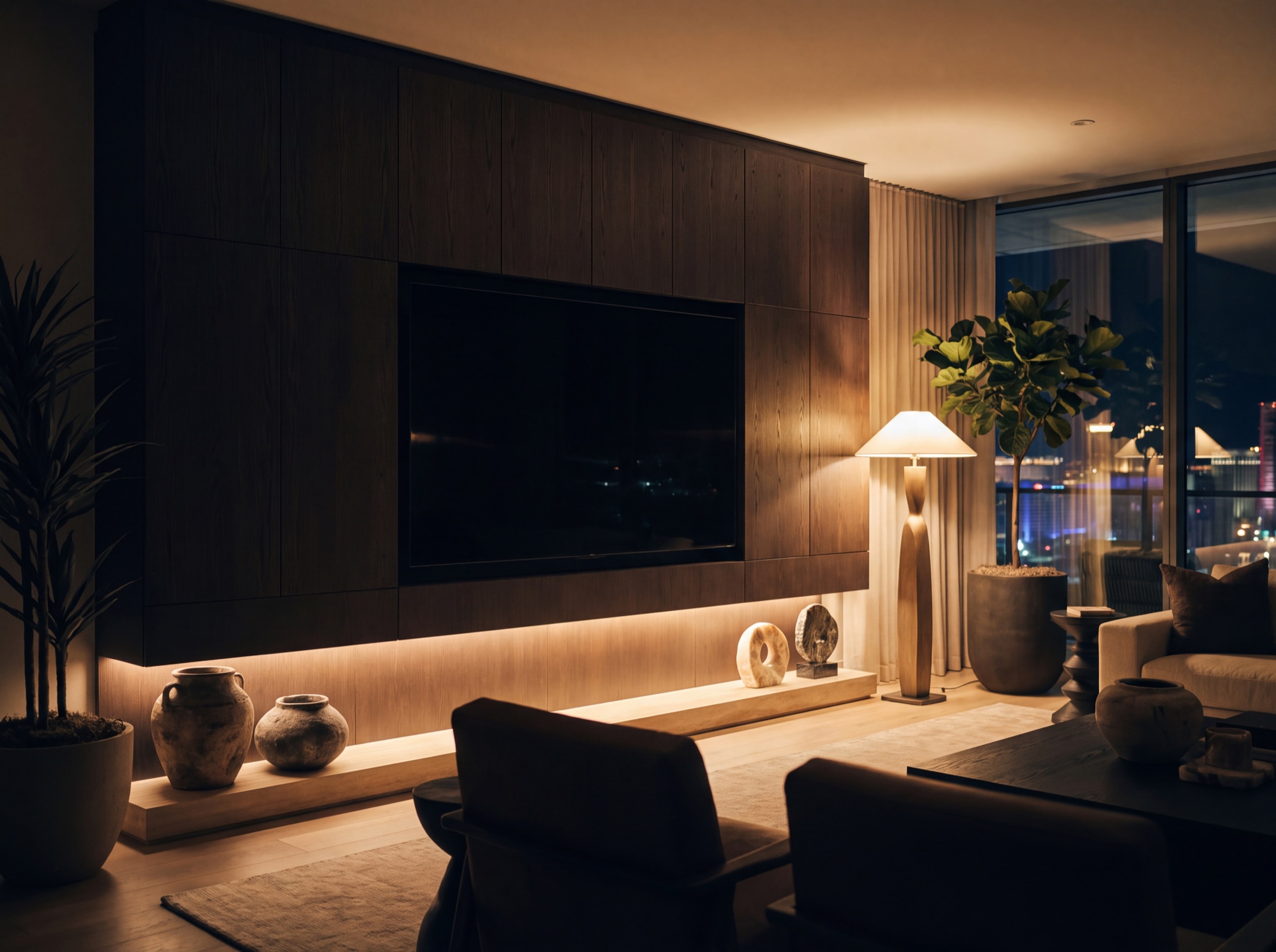
In the room, that leaves a display and a remote. No shelf of boxes, no nest of cables, no third remote deep in the sofa. Displays recess flush into joinery or stone where the design calls for it, and the whole system answers on the same interface as the rest of the house. When something needs attention, every source sits in one labeled, documented rack: one place to cool, one place to power, one place to diagnose.
New build, or the house you are in
Decided on the drawings, or retrofitted with straight answers.
The best whole-home systems are decided on the drawings. Speaker positions engineered against the furniture plan, wire pulled to every zone and display while the walls are open, and the rack given a ventilated home of its own. Done then, audio and video are part of the architecture rather than an addition to it, and the hardware all but disappears.
In a finished home the routes in are limited. In-ceiling speakers are usually a routine retrofit where there is attic or joist access, and existing wiring is tested and reused where it earns its keep. Invisible speakers want a plaster skim, so they make the most sense in rooms already being refinished. Where a wire genuinely can't go, we will say so and design around it rather than promise a wall we would have to open.
What's in, what's out.
Included
- Audio and video design with a room-by-room zone schedule
- Speaker layout matched to each room's seating and geometry
- Trimless, in-wall and invisible speaker supply and installation
- Statement loudspeaker selection and placement
- Centralized video distribution and display installation
- Programming, per-room tuning and handover documentation
06 items
Usually separate
- Streaming subscriptions and the accounts behind them
- Cable, satellite and internet service contracts
- Joinery and millwork around displays, through your builder
- Decorative acoustic finishes, through your interior designer
04 items
Better together
04 items
Asked in every audio and video conversation.
Do invisible speakers actually sound good?
Very good, and we'll be straight about the physics. A speaker playing through a finished plaster surface gives up a little output and the last degree of detail compared with a trimless grille in the same ceiling. In a hallway or a formal room nobody will ever notice. In the rooms where you really listen, we say so and recommend trimless or statement instead. The wrong answer is the same speaker everywhere.
Can every room play something different?
Yes. Zones are independent by default: the kitchen can take a playlist while the study takes the morning news and the bedroom stays silent. Joining rooms is the special case, one press for a party, and the system keeps levels sensible so a zone joined late doesn't arrive at full volume. Bedrooms can carry their own limits, which parents tend to appreciate.
We take listening seriously. Will distributed audio satisfy us?
Distributed audio is tuned for living: even coverage while you cook, host and move through the house. Serious listening is a different activity and it earns a different design: a statement pair placed for a seat, symmetric to the room, with the acoustics treated honestly. We build both into one system, so the house plays everywhere and the listening room still rewards sitting down. What we won't claim is that background speakers replace it.
Where does all the equipment actually go?
Into one rack, in a ventilated closet or a corner of the mechanical room, built with the clearance to be worked on. Everything in it is labeled at both ends and matches the handover drawings, so the engineer who opens it in five years knows exactly what they are looking at. That location is the point: nothing stacked in your millwork getting warm behind closed doors, and one place to look when something needs attention.