
Structured cabling and commercial networks.
Fiber and copper cabling, switching and wireless. Certified per link, with VLANs, addressing and documentation agreed with your IT team.
What actually goes wrong
The cheapest layer to cut, the most expensive to revisit.
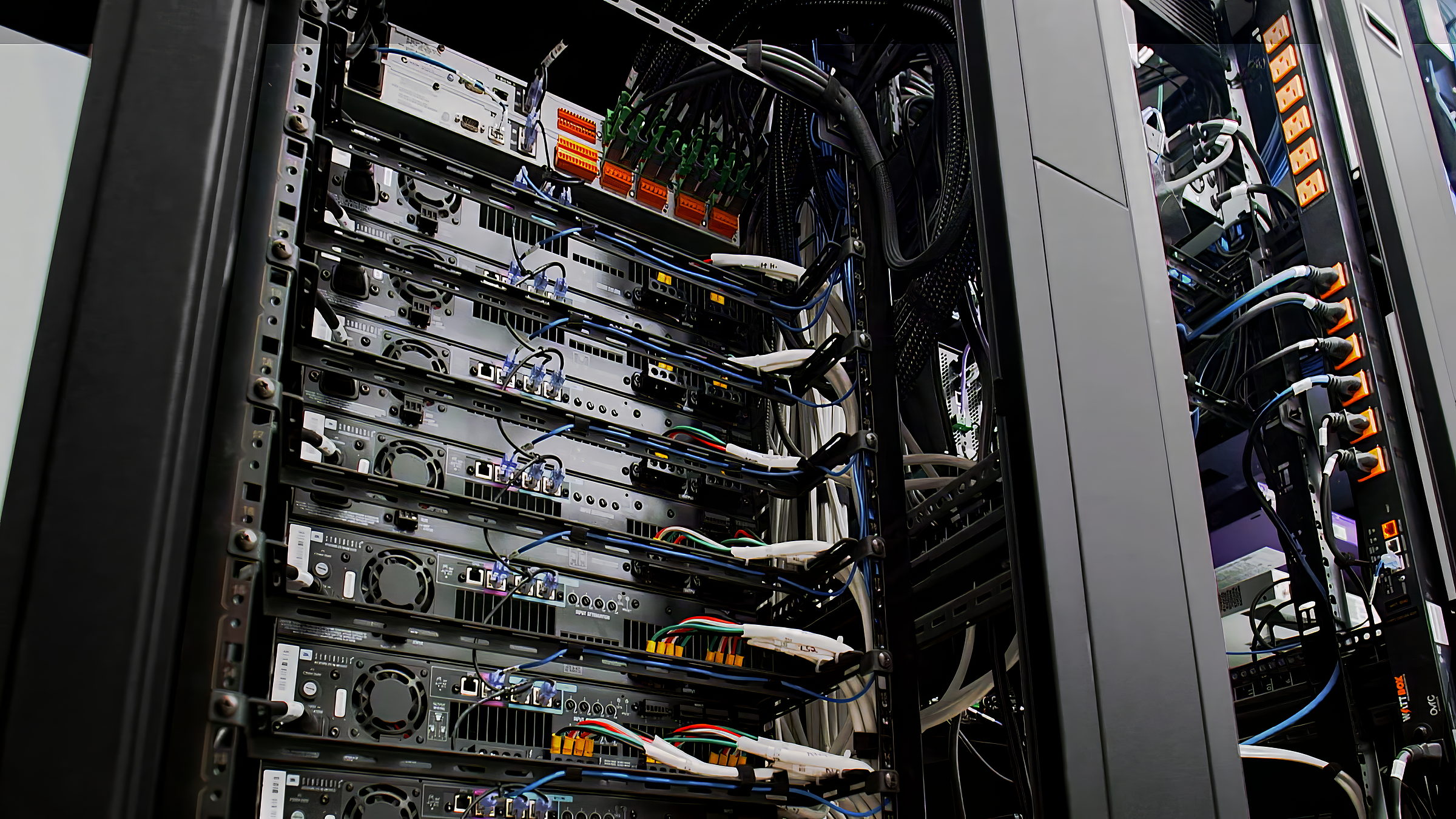
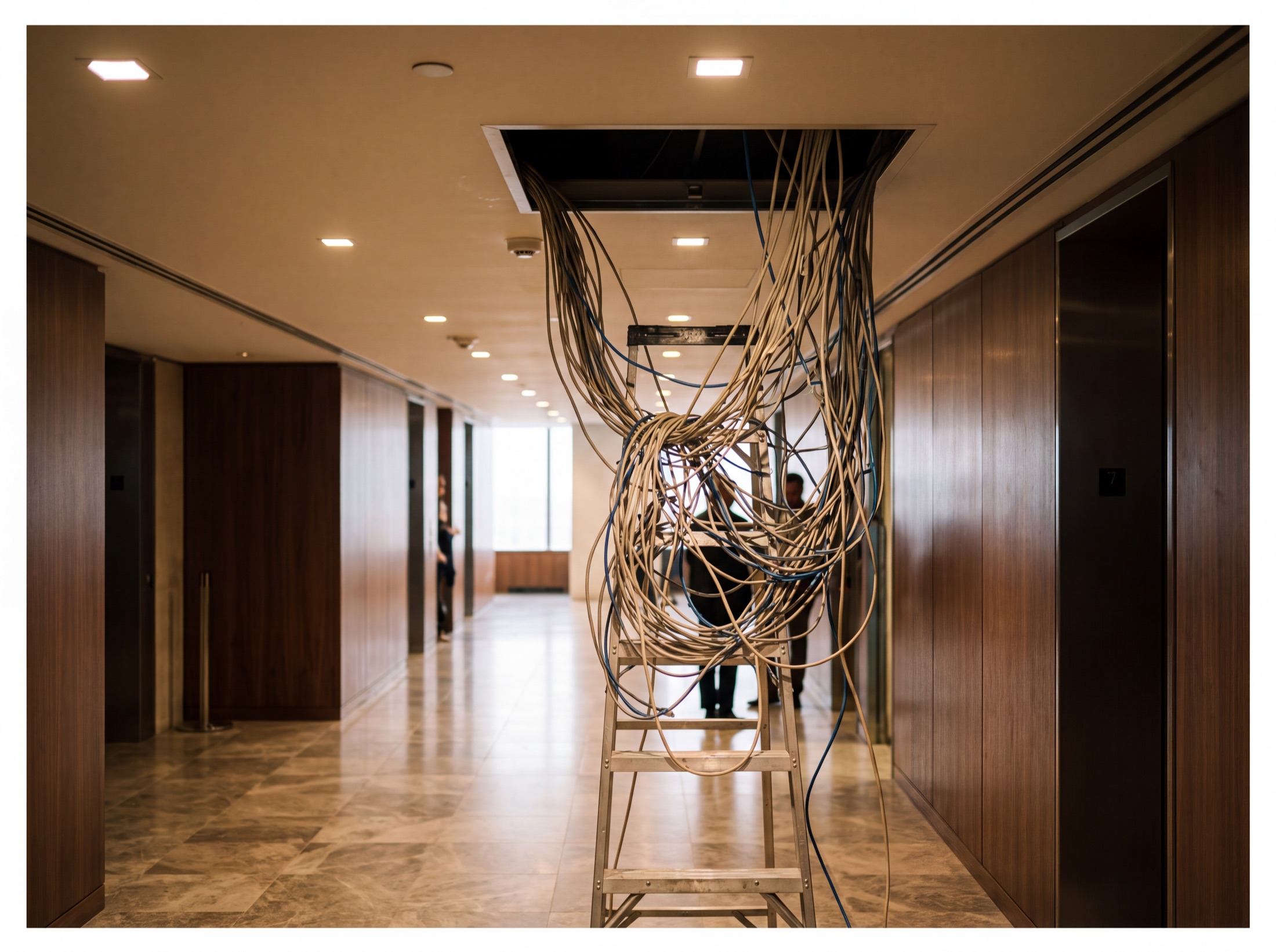
Almost every intermittent fault we are called in to fix on somebody else's project traces back to the same place. Not the displays, not the control processor, not the software. The cable, the termination, or the switch configuration underneath them.
It is the cheapest layer to cut during value engineering and the most expensive one to revisit, because by the time it misbehaves the ceilings are closed and the building is occupied. A meeting room that drops its video call twice a week is almost never a meeting room problem.
How we build it
Its own discipline, on the same drawings as the architecture.
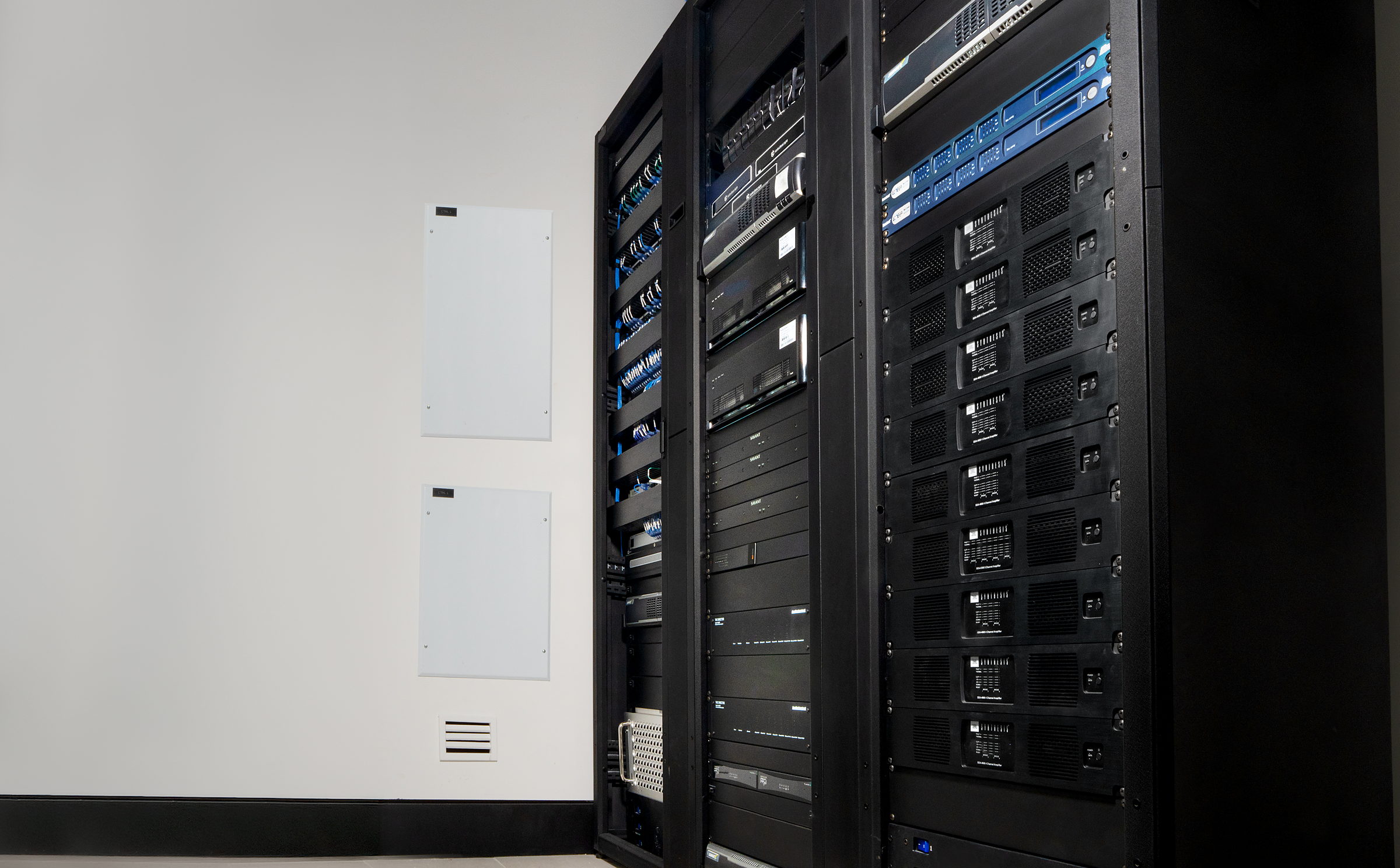
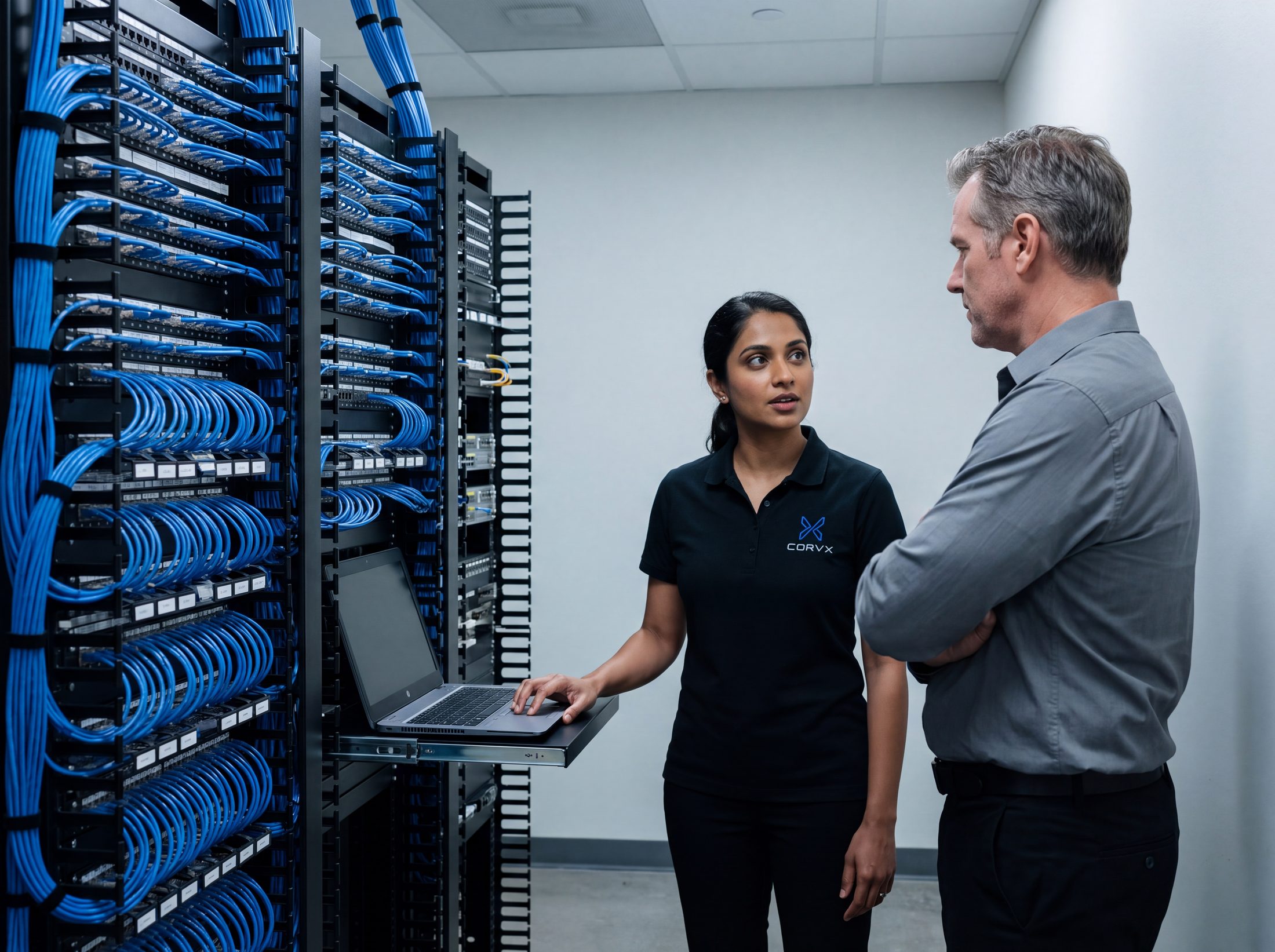
The infrastructure package is designed at the same time as the architecture, against the same drawing set, and it is treated as its own discipline rather than as a line item under AV.
- Pathway and containment coordinated with the other trades before anything is pulled, so cable routes are decided on a drawing rather than in a ceiling.
- Certified termination to the applicable standard, with test results recorded per link rather than sampled.
- Labeling at both ends, matched to the as built drawings and the rack elevations, so the next person to open the cabinet can read it.
- Switching and network configuration designed for the traffic the building will actually carry, including the AV, control and security loads.
- Segregation of building systems where it matters, agreed with your IT team rather than imposed on them.
What you get at handover
Not just a working network. The evidence that it works.
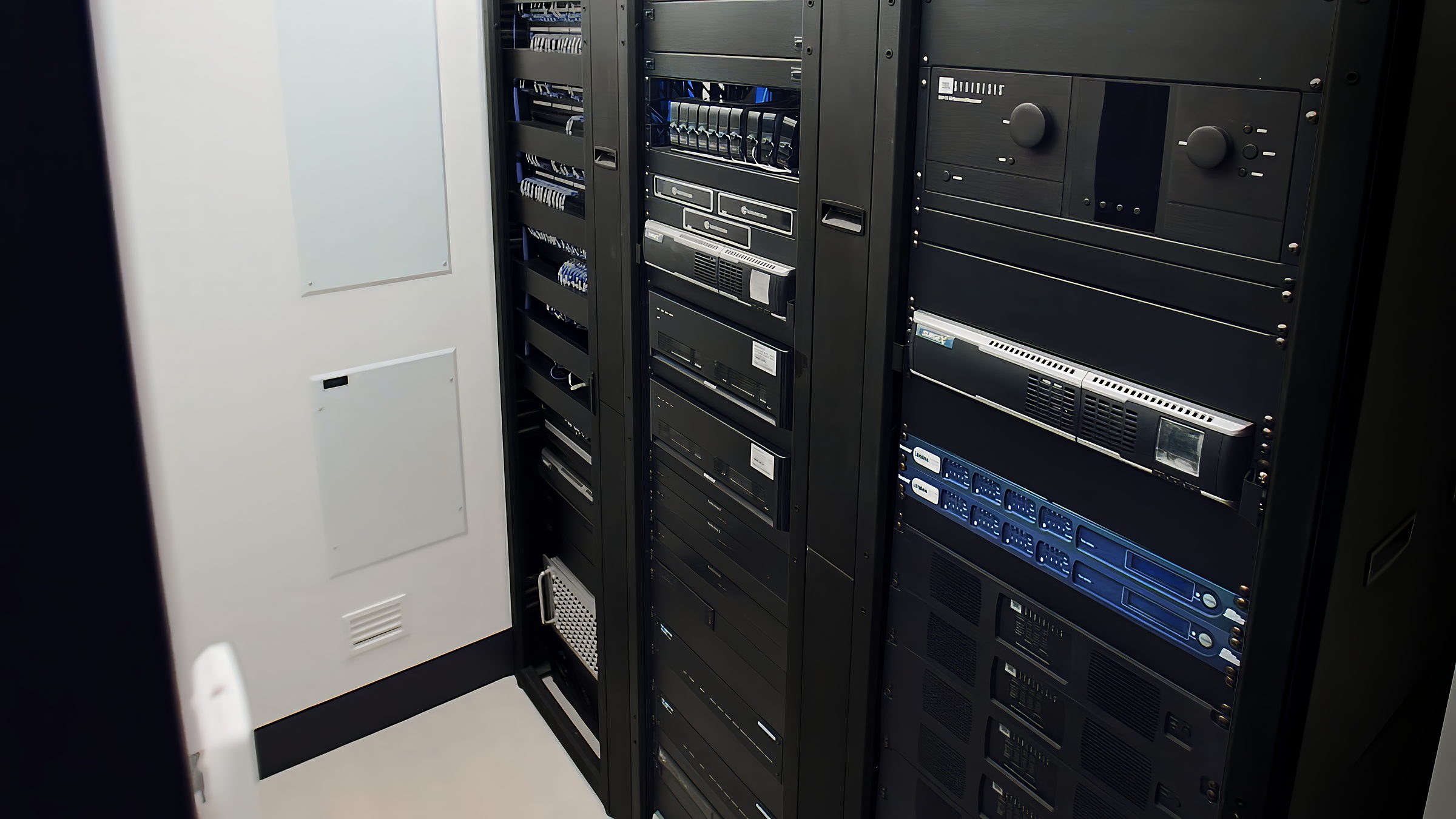
The deliverable isn't just a working network. It is the evidence that it works, in a form your facilities team and your IT team can both use.
- Certification results for every link, issued as a document, not a verbal assurance.
- As built drawings reflecting what was installed, not what was drawn in month two.
- Rack elevations and a labeling schedule that match the physical installation.
- Network documentation: addressing, VLANs, and the reasoning behind both.
If you ever replace us, that pack is what makes the next integrator's job possible. We would rather write it properly than hold a building hostage with undocumented work.
Working with your IT team
Your standards, agreed at design stage. Never a parallel network.
On most commercial projects there is an incumbent IT function with its own standards, its own security posture and a reasonable suspicion of anyone arriving to put unmanaged devices on their network. That conversation goes better when it happens at design stage.
We'll work to your standard, hand over to your team, or manage the building systems network alongside them. What we won't do is quietly build a parallel network nobody owns.
What's in, what's out.
Included
- Infrastructure design and coordinated drawings
- Containment, pathway and rough in
- Supply, installation and certified termination
- Rack build, dressing and labeling
- Switching, configuration and commissioning
- Test results, as builts and handover documentation
06 items
Usually separate
- Carrier and internet service contracts
- Server and storage hardware
- Desktop and end user IT support
- Software licensing held by your IT function
04 items
Better together
- AV and video conferencing
- Security, access and CCTV
- Control and automation
- Care plans and monitoring
04 items
Asked before every infrastructure package.
Do we need this if the building already has cabling?
Not necessarily, and we'll tell you if the existing infrastructure is fit for what you are adding. What we won't do is hang a new system off cabling we can't certify and then carry the blame for its behavior. If it tests clean, we use it.
Can our IT team keep control of the network?
Yes, and on most corporate projects they should. We engineer to their standard and hand over documentation they can work from. Where the building systems need their own segment, that gets agreed with them in design rather than discovered later.
How long does certification take?
It is a scheduled activity rather than an afterthought, and it happens before the systems above it are commissioned. The point of testing early is that a failed link is a cheap problem in first fix and an expensive one after handover.
What happens when we expand?
The design allows for it, and the documentation means the expansion is a known quantity. Buildings that were cabled to the exact count of day one requirements are the ones that end up with surface trunking three years later.