
AV systems and video conferencing.
Displays, LED walls, cameras, microphones and DSP. One-touch join on Teams, Zoom and Google Meet, with remote monitoring and support.
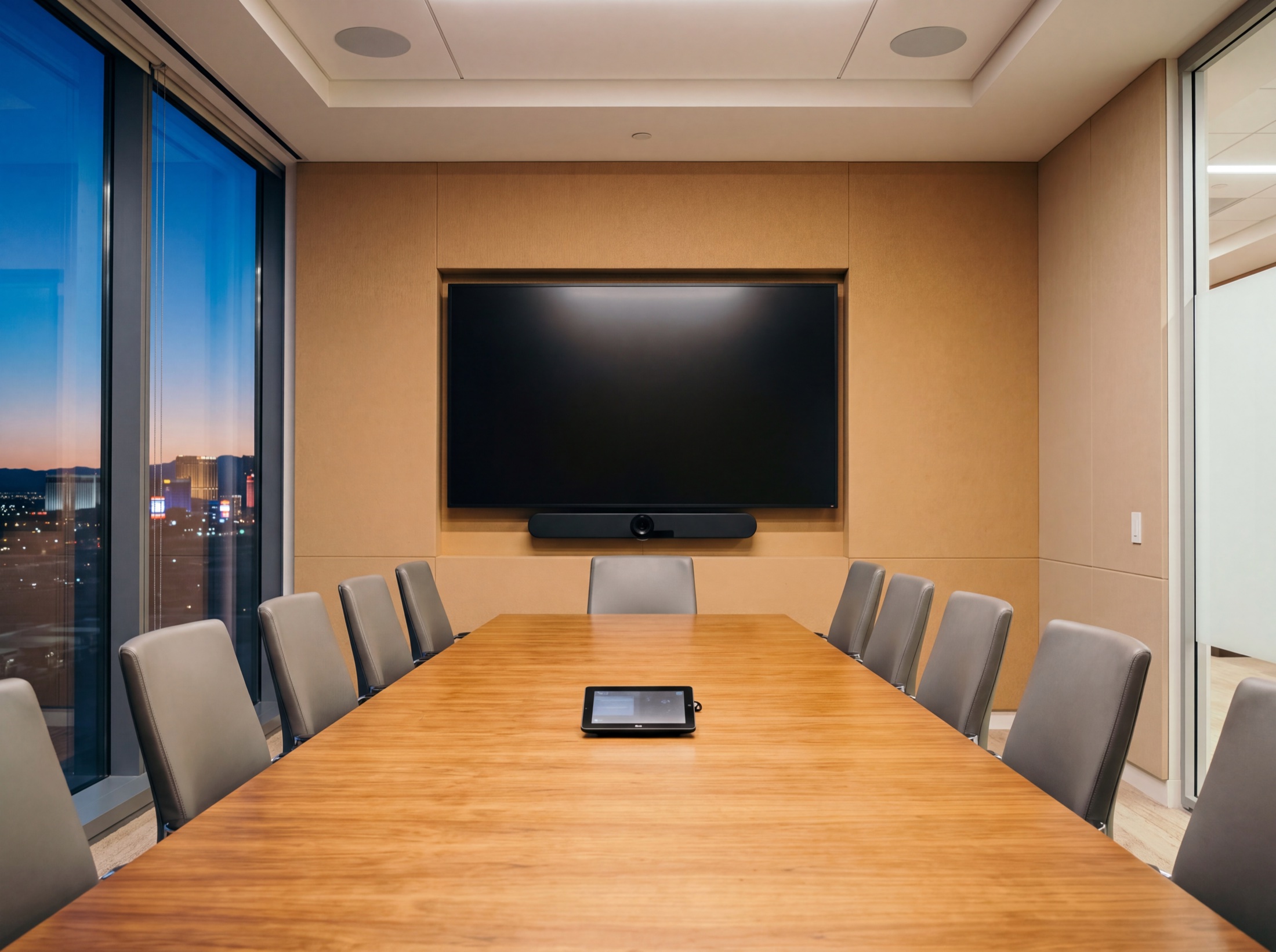
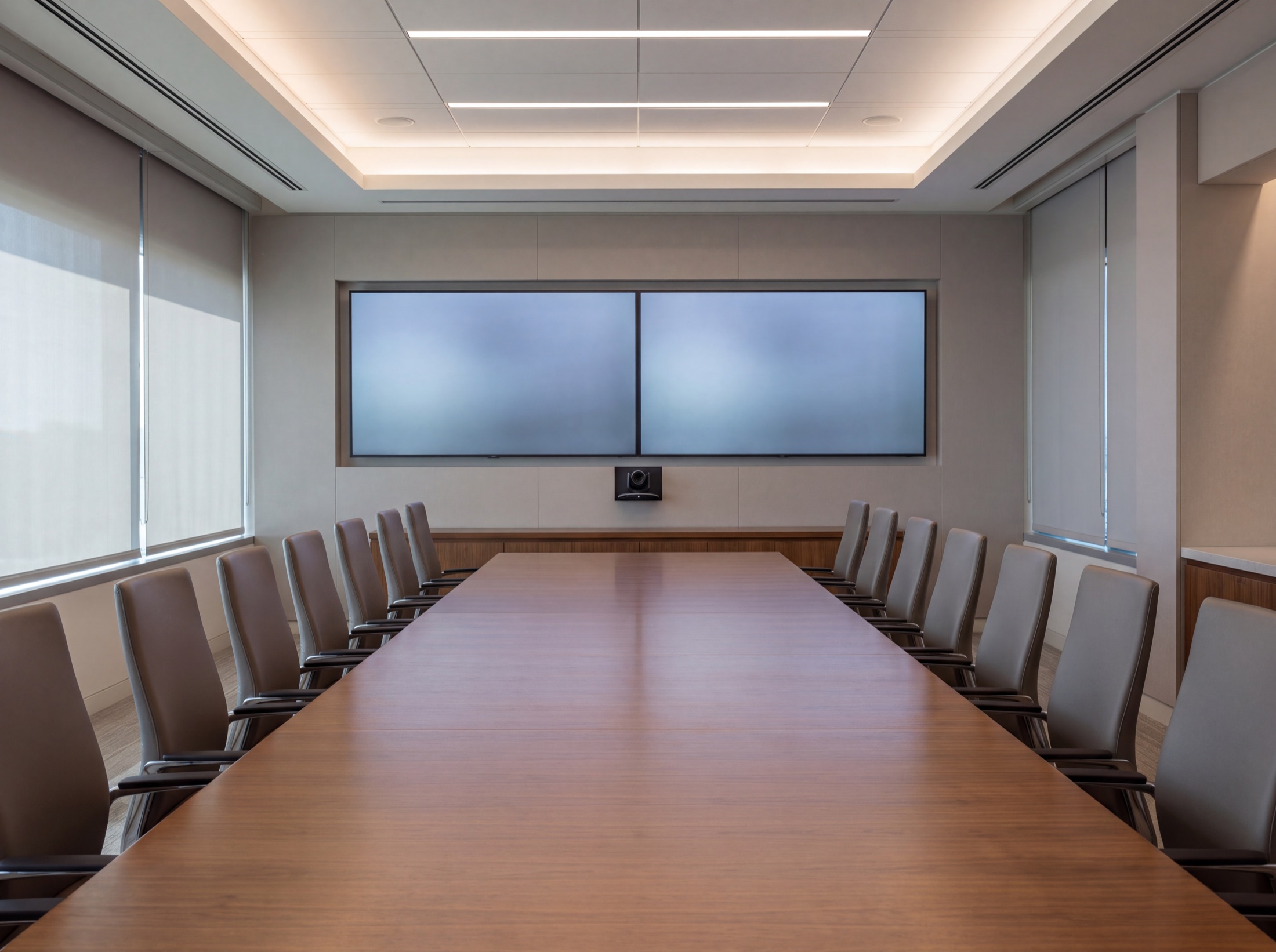
The most expensive ten minutes in the building
Downtime that lands exactly when the room exists to work.
Add up who is sitting in the room while somebody hunts for the right input, passes a cable around the table, or restarts the call for the people dialing in. A meeting room that fails to connect isn't an inconvenience. It is the most expensive downtime in the building, and it lands at the exact moment the room exists to work.
It is rarely the platform. It is the room: a camera mounted where it can only see the backs of heads, microphones that reach half the table, a display sized to the wall it decorates instead of the farthest seat, and cabling underneath that nobody certified. Those are infrastructure problems, and they have infrastructure answers.
One tap, and the room is ready
Lights, glare, camera, microphones, then the call connects.
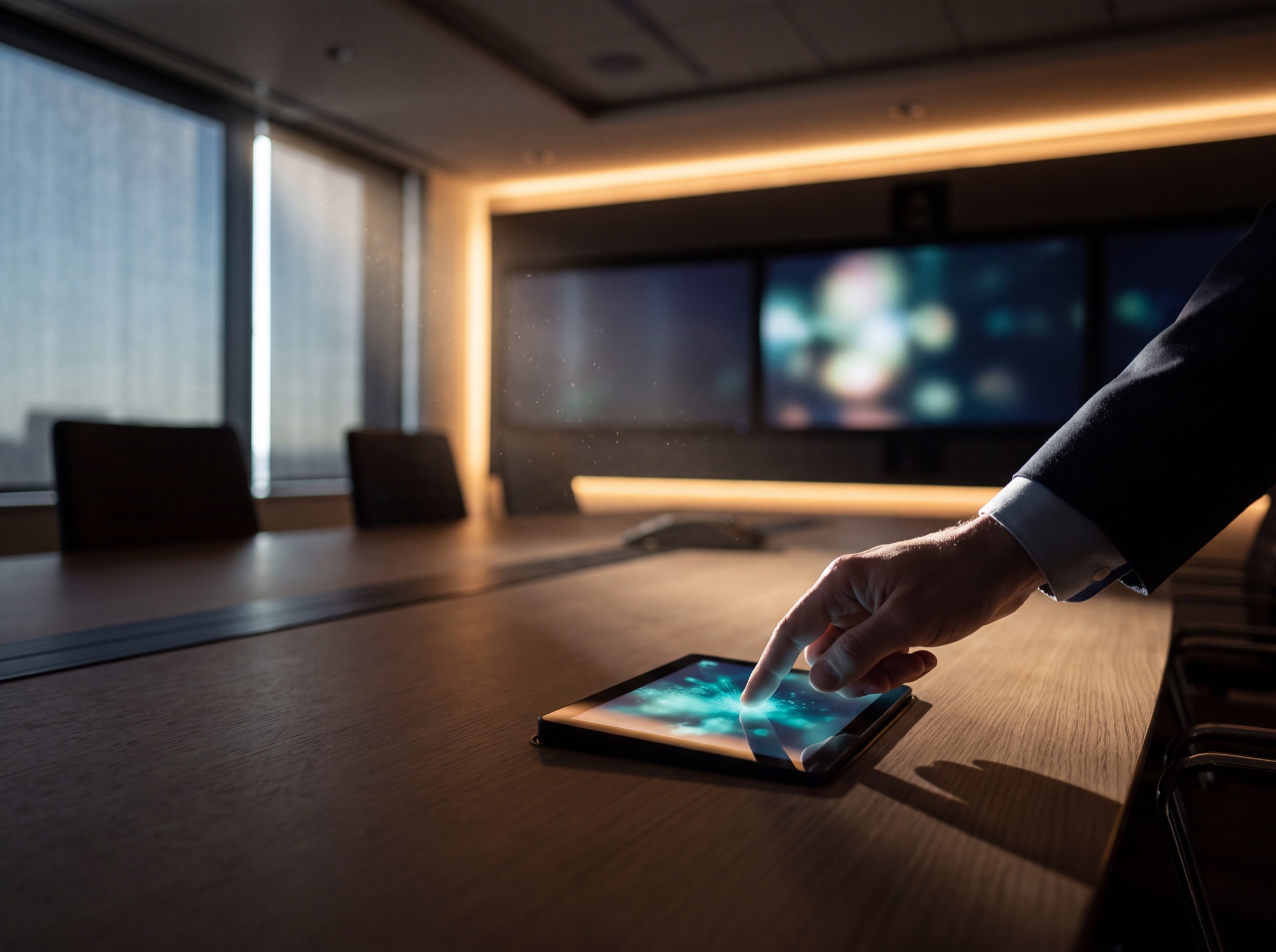
In a room we build, joining a meeting is one press on the panel at the table. The lights take their meeting scene and the shades handle the glare, the display wakes, the camera frames the table, the microphones open, and then the call connects. That order is deliberate. The room prepares itself before it puts anyone on screen, because that is the order an engineer programs, not just the order a demo looks best in.
We are deliberately platform agnostic. The room is built around the call, and it joins meetings on whichever platform your business runs on. If the company changes platforms in three years, the rooms follow with a configuration change rather than a refit. Where the room belongs to a larger building system, it sits on the same control backbone as everything else we do, Crestron, Lutron, Control4 or Savant, so one press means the same thing everywhere in the building.
Half the room isn't in the room
Hybrid first, and the decisions are physics.
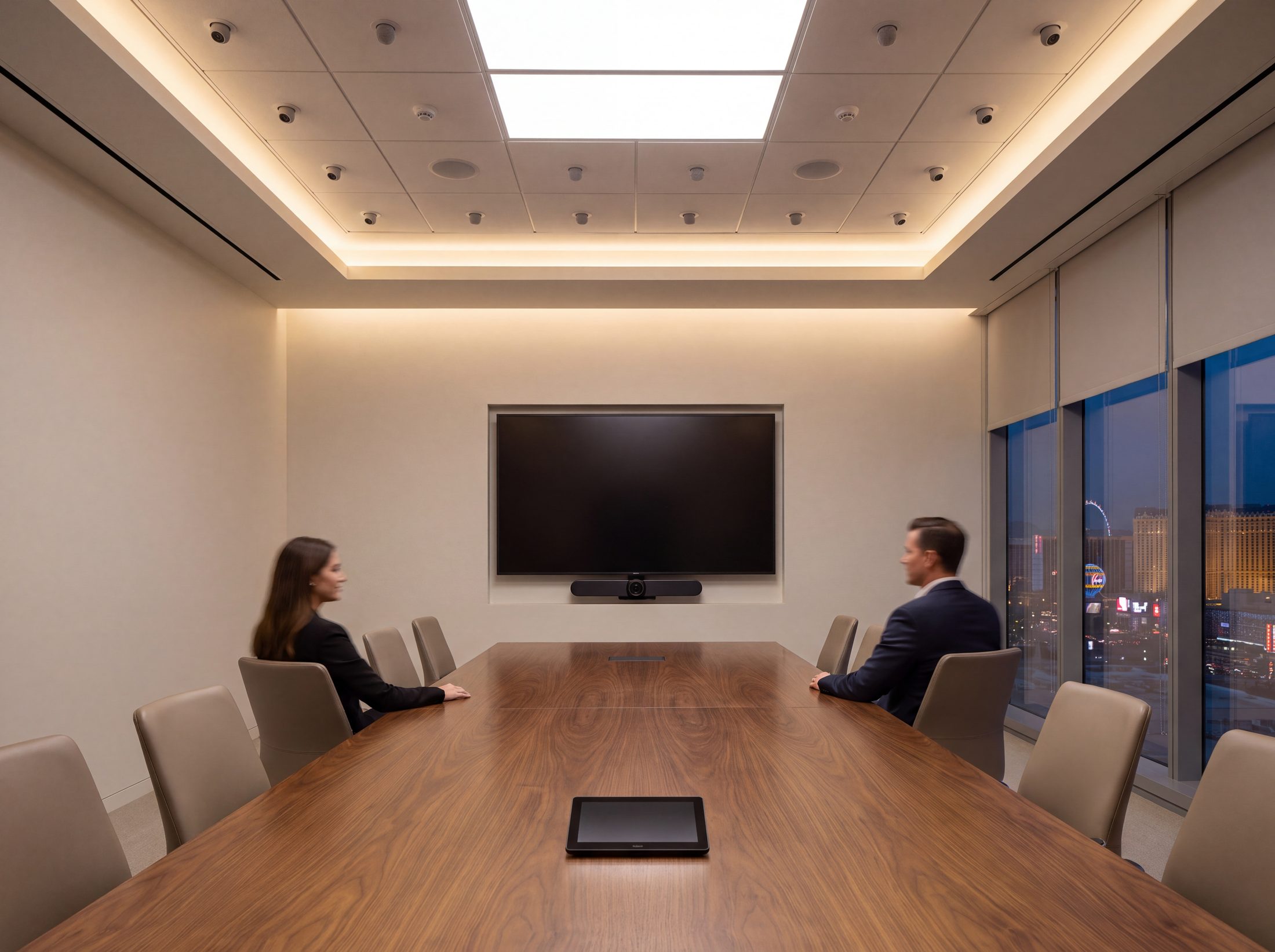
Hybrid is no longer the exception, yet most rooms still treat the people on the call as an afterthought. Ours are designed hybrid first, and the design decisions are physics before they are taste.
- Displays sized to the farthest seat, not to the wall. The person at the end of the table reads the content and the faces without leaning in, which is a viewing angle calculation made against the room, never a bigger-is-better guess.
- Cameras that frame people, placed so the far end sees faces across a table, not a distant room shot down from a corner of the ceiling.
- Microphone coverage calibrated to every seat, so the quietest voice at the end of the table arrives at the same level as the one nearest the equipment. Coverage is designed on the drawing and verified in the finished room.
- Acoustics treated as part of the design. A glass box photographs beautifully and sounds like one. We treat the surfaces so the far end hears a voice, not a room.
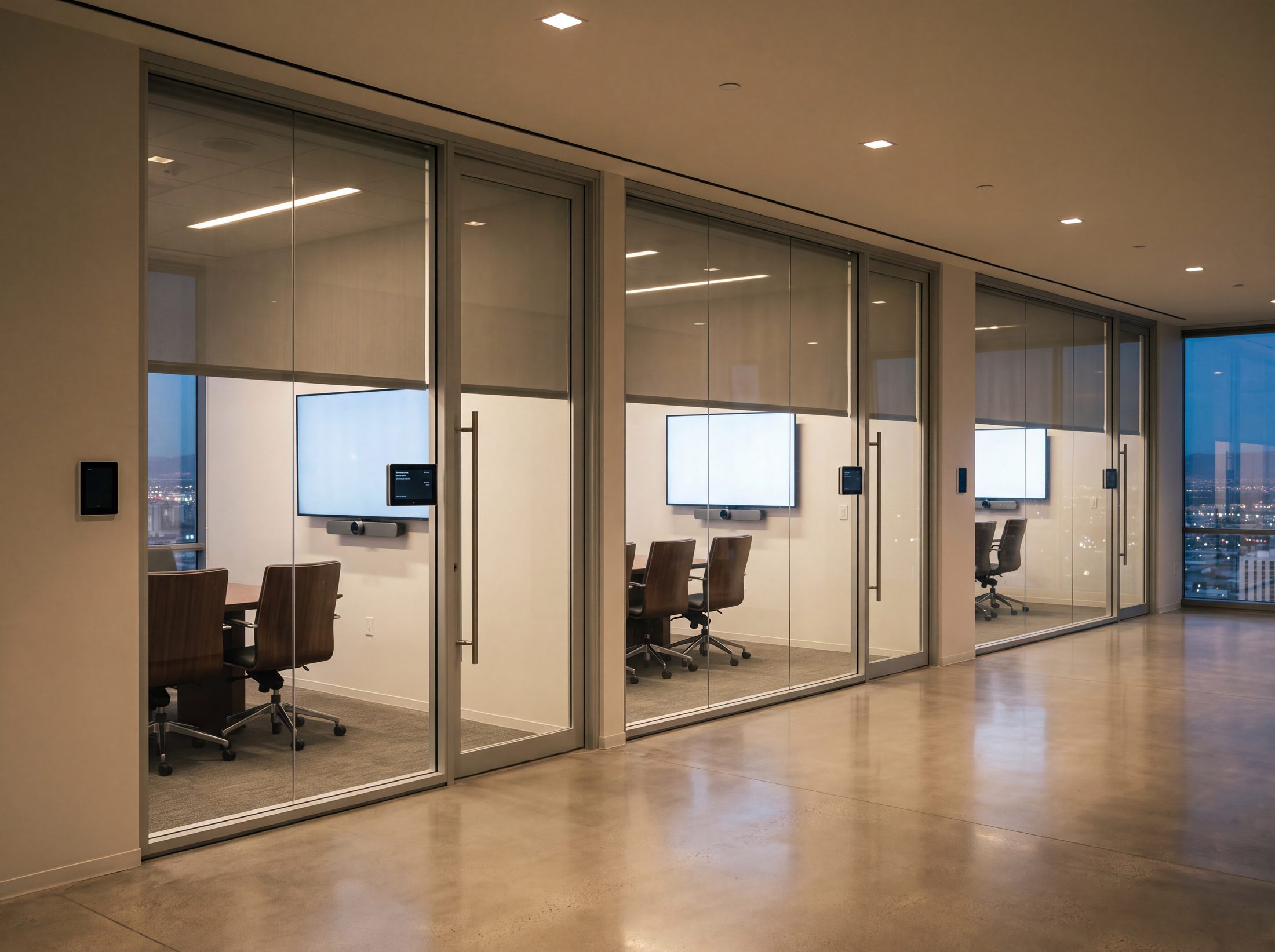
Design the room once. Roll it out at scale.
The asset isn't the first room. It is the standard behind it.
If you are building more than one room, the asset isn't the first room. It is the standard behind it: display size by room dimension, camera and microphone coverage, the same panel running the same one-tap join, documented down to the cable schedule. Design it once, prove it in a pilot room, and the rollout across a floor, a building or an estate becomes a known quantity.
That standard is what makes thirty rooms supportable. Every room behaves identically, so a visitor who has used one has used them all. Your facilities team stocks one set of spares, and a fault in room fourteen is diagnosed from the documentation of room three. Discovery is where the standard gets written.
Boardrooms, town halls, training rooms
Different rooms, same test: walk in, tap once.
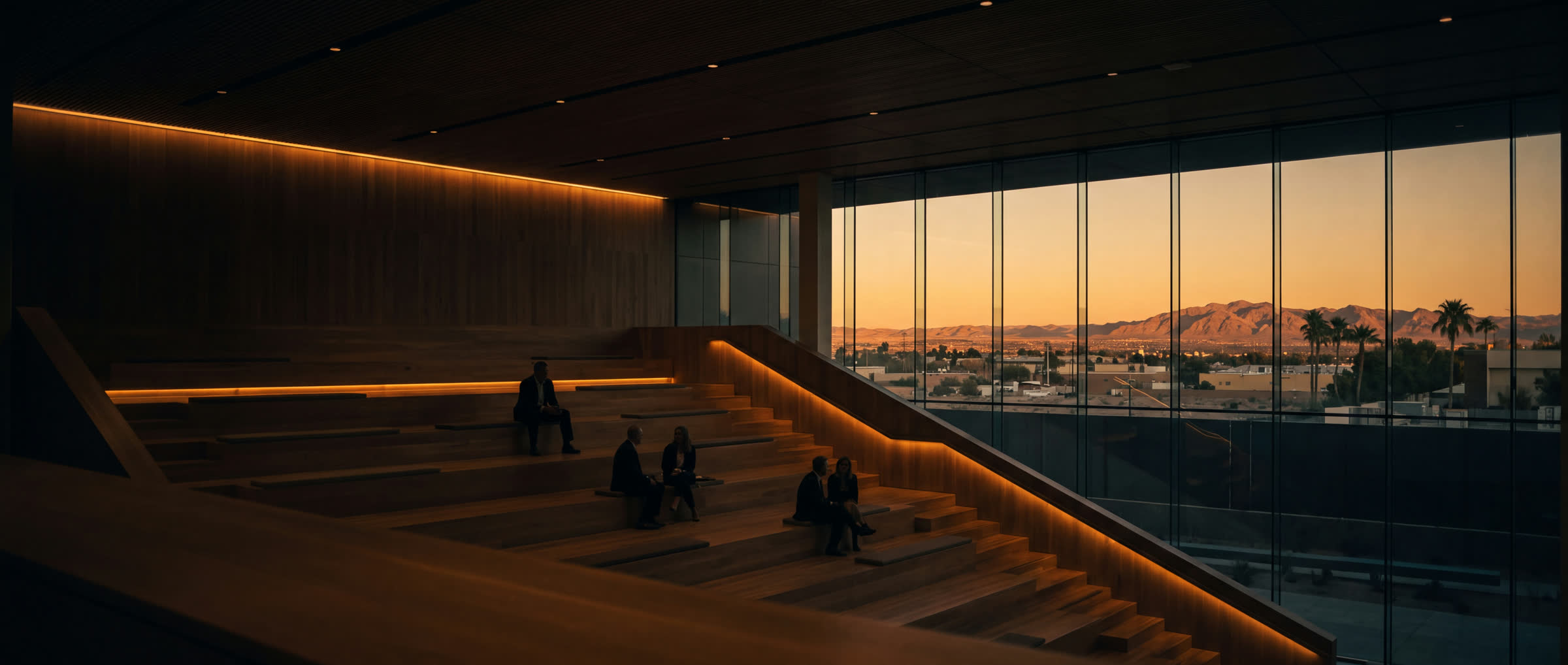
The standard covers the everyday rooms. The rooms that carry your biggest moments are engineered individually. Boardrooms, where the technology stays out of sight until it is needed and the finish matters as much as the function. Town halls and all-hands spaces, where one voice has to reach the back row and every remote office at the same moment. Training rooms, where sessions are delivered, captured and repeated without a technician standing by.
Different rooms, same test: walk in, tap once, and the room does the rest.
What's in, what's out.
Included
- Room design: display sizing, camera framing and microphone coverage
- Coordinated drawings, and the room standard documented for rollout
- Supply and installation of displays, cameras, microphones and audio
- Control programming and the one-tap join
- Room scheduling panels and calendar integration
- Commissioning on live calls, handover documentation and training
06 items
Usually separate
- Platform licensing and user accounts, held by your IT function
- Calendar and directory administration
- Laptops, headsets and personal peripherals
- Furniture and millwork, coordinated with but supplied by others
04 items
Better together
04 items
Asked before every meeting room package.
Which video platform do you recommend?
The one your business already runs on. The rooms should follow the platform decision your IT function has made, not fight it. We build the room so joining is one tap on your platform, and if the company changes platforms later, the rooms move with a configuration change, not a refit.
Can you fix the rooms we already have?
Usually, and often without gutting them. Most far-end complaints trace to microphone coverage, camera placement or untreated acoustics rather than to the equipment brand. Those are measurable problems. We assess the room, tell you which faults are worth fixing in place and which need a redesign, and reuse whatever earns its place.
We are fitting out thirty rooms. Do you quote all thirty?
We design one properly first. The pilot room proves the standard: sight lines, coverage, the one-tap behavior, the documentation. After that the rollout is a known quantity, and the price per room reflects repetition instead of thirty one-off builds.
What happens when a room fails five minutes before a board meeting?
On a care plan, we usually know before you do. The rooms are monitored, most faults announce themselves ahead of the meeting that would have found them, and many fixes happen remotely. Response times are set out in the agreement before you sign, not negotiated during the emergency.